
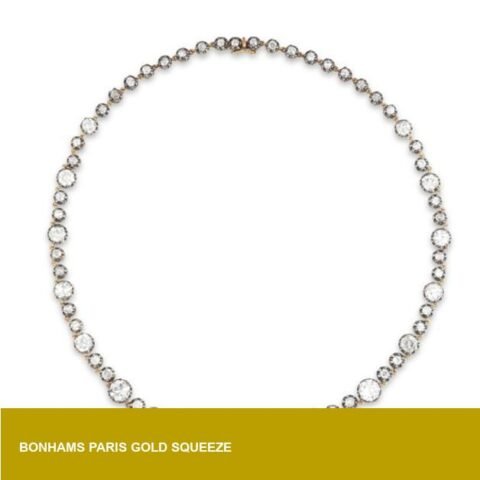
Bonhams’ Paris fine jewelry sale later this week arrives against a backdrop of historic precious‑metal prices: gold is holding steady above $5,000 per ounce. That metal price floor is already shaping how consignors set reserves and how bidders value pieces where gold weight contributes materially to replacement cost.
- House: Bonhams
- Event: Fine jewelry auction, Paris — later this week
- Key market signal: gold above $5,000 per ounce
- Region: Paris / European auction market
- Buyer focus: collectors and trade buyers tracking metal‑linked valuation
Where this sits in 2025–26 market trends
Precious‑metal strength has become a structural input to jewelry valuation. When gold trades at multi‑year highs, the intrinsic material value — the 18k or 22k gold used for shanks, mounts and substantial cuff constructions — becomes a visible floor under estimates. In practical terms, lots with notable metal heft and open‑backed settings will be assessed both for vitreous luster and for melt‑equivalent value; where micro‑pavé fields or dense goldwork are present, replacement‑cost math is no longer purely theoretical.
At the same time, buyers and consignors are attuned to stylistic counters to a metal‑driven market: pieces that emphasize colored gemstones, unusual cuts or refined proportioning (knife‑edge shanks, satin‑finished gold surfaces, or high‑nacre pearls with silky nacre) can decouple part of their value from spot metal prices. Auction houses are increasingly asked to separate gem provenance and craftsmanship narratives from raw metal content in catalogues and condition reports.
Why this matters to US retailers, wholesalers and investors
For US trade players, Bonhams’ Paris results will serve as a near‑term price discovery event. Three operational implications are likely:
- Inventory pricing: Expect pressure to reprice gold‑heavy SKUs. Retailers should reconcile current retail markdown strategy with a higher bullion floor that affects replacement cost and insurer valuations.
- Merchandising strategy: Consider increasing emphasis on low‑weight designs, colored‑stone lines, or pieces where craftsmanship — tight micro‑pavé, open‑backed gemstone presentation, balanced proportioning — commands premium independent of metal content.
- Buying and consigning: Wholesalers and consignors should watch auction reserves and hammer results for benchmark guidance on how much of a lot’s estimate reflects metal versus gem and provenance premiums.
Bonhams’ Paris sale will therefore be watched not just for individual lots, but as a data point on how sustained gold strength reshapes estimation, buyer behavior and inventory strategy across markets. For dealers and investors focused on margin management, the coming results will clarify whether heavy‑gold vintage and high‑metal pieces retain collectible premiums or increasingly track bullion moves.
Image Referance: https://www.jckonline.com/editorial-article/bonhams-paris-sale/