
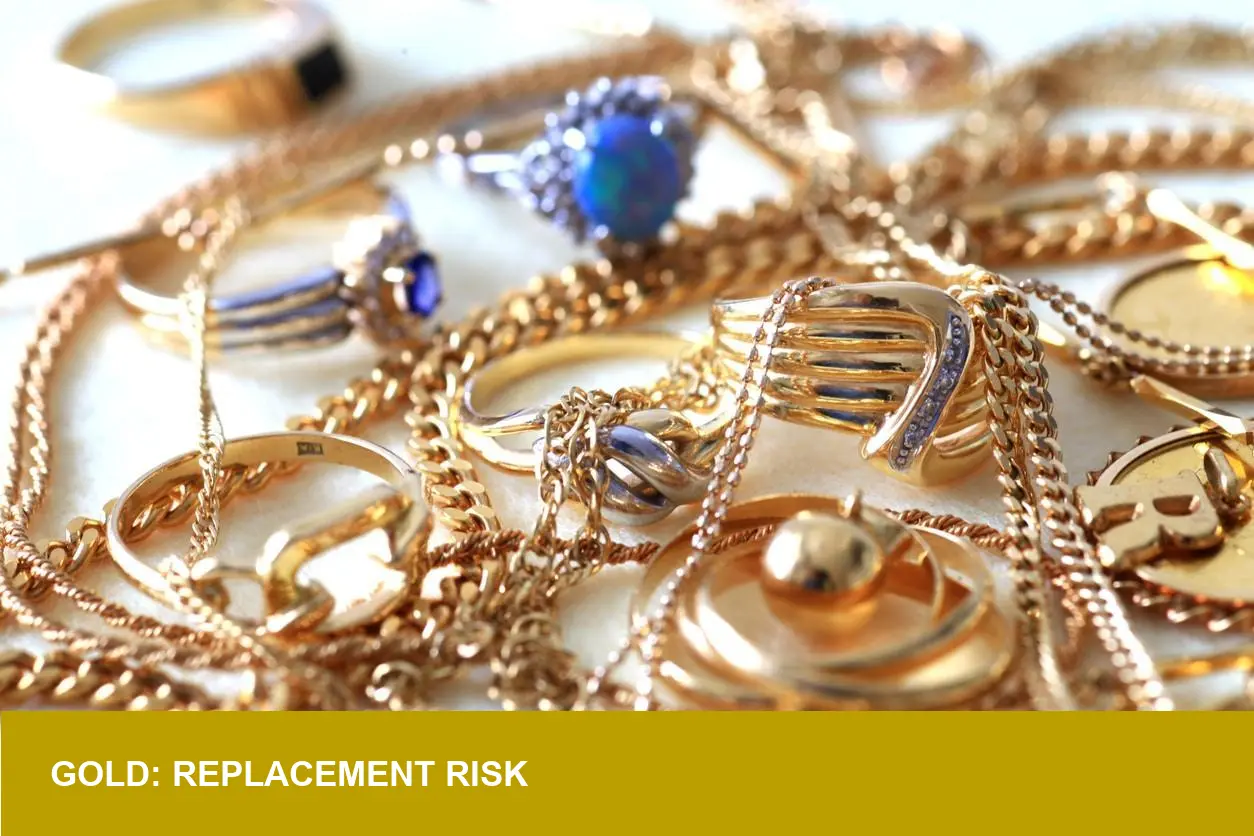
Homeowners and renters face rising replacement costs as gold climbs to about $4,200 per troy ounce, elevating the stated value of many pieces beyond common policy limits and pressing owners to reappraise or schedule coverage.
- Price: Gold ≈ $4,200 per troy ounce (up ~58% year‑over‑year)
- Carat Weight: Typical jewelry 14k (58.3% gold); 24k is pure gold
- Origin: Global market share — gold jewelry 54.9% of $366.8B market (Grand View Research, 2022)
- Date: Market note and coverage guidance — Dec. 8, 2025
Precious metal surge reshapes replacement math
Gold’s ascent — roughly $4,200 per troy ounce in recent trading — has tangible consequences for anyone who keeps fine jewelry at home. The immediate issue is arithmetic: older appraisals tied to past spot prices no longer reflect the current replacement cost. That gap converts a sentimental or aesthetic asset into a material insurance exposure for homeowners and renters.
Why standard policies may fall short
Most homeowners and renters policies treat jewelry as personal property but apply special aggregate limits, commonly $1,000–$2,500. Those floors were set when the granular weight of bullion and retail markups were lower. With gold up more than 50% in a year and other metals — platinum and silver — also surging, replacement figures for many pieces can now eclipse those limits.
Scheduling, appraisals and practical steps
Industry spokespeople recommend three immediate actions. First, inventory: photos, receipts and dated appraisals create a traceable record. Second, reappraise high‑value items every few years; market swings in 2025 make a biennial or triennial cadence prudent. Third, consider scheduling — an endorsement or standalone policy that insures items at declared value and often extends protections for accidental loss, mysterious disappearance and broader perils than a standard policy.
Typical scheduled coverage carries premiums roughly 1–3% of declared value annually, with deductibles usually capped near $500. Insurers may require per‑piece appraisals; some scheduled products automatically adjust limits for rising value under defined conditions.
Market context: 2025 trends that matter to jewelers and buyers
Three converging 2025 trends compound the issue. Sustainability: demand for recycled gold and chain‑of‑custody verification has tightened supply channels and raised sourcing costs. Lab‑grown diamonds continue to reshape price expectations for stones, nudging designers toward heavier gold settings to retain perceived luxury. Sculptural aesthetics have increased average metal weight per piece as designers favor bolder forms — that substantial heft increases intrinsic replacement value.
Retail and investor implications
For retailers, rising metal costs compress gross margins on legacy stock priced when gold was materially cheaper. Retailers should update wholesale‑to‑retail margin models, revise pricing on stock and communicate value to customers with clear product specs (karat, gram weight, hallmark). Inventory appraisals used for business insurance should be refreshed to reflect current spot and retail differentials.
For investors and owners, the lesson is risk management. Jewelry is both a wearable asset and a liability when uninsured. Investors with exposure to precious metals — through inventory, private collections or funds — should factor accelerated price movements into asset allocation, liquidity planning and insurance budgets.
How agents and insurers are responding
Insurance professionals note an uptick in inquiries. Sarah Cast of Allstate and Loretta Worters of the Insurance Information Institute have advised clients to check policy limits, consider riders or standalone policies, and maintain up‑to‑date appraisals. Scheduling remains the most direct fix where individual items exceed standard policy caps.
Action checklist for retailers and owners
- Take a photographed inventory with receipts and appraisals.
- Confirm karat and gram weight for each item; request per‑piece appraisals when necessary.
- Review homeowner/renter policy limits and agent filings for special jewelry caps.
- Consider scheduling high‑value pieces or purchasing a dedicated valuables policy.
- Retailers: reprice older inventory and update insurance valuations on business policies.
Rising metal prices are not merely a headline: they change the economics of replacement and the calculus of insurance. For retailers and owners in the U.S., the prudent next step is measurement — reappraise, document and, where appropriate, schedule coverage before market movement forces reactive decisions.
Image Referance: https://programbusiness.com/news/gold-prices-soar-prompting-homeowners-to-recheck-jewelry-coverage/