
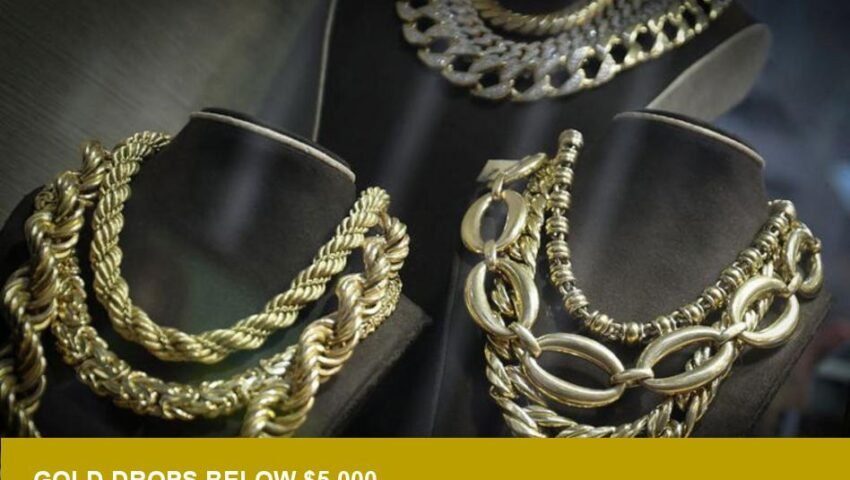
Gold prices tumbled more than 8% on Friday to slip below the $5,000 mark as the US dollar strengthened amid speculation over the imminent appointment of a new U.S. Federal Reserve chair, Reuters reported on Jan. 30. The rapid pullback came after a run of record peaks; despite the decline, the metal remained on track for its largest monthly gain since 1982. Other precious metals also fell sharply as traders took profits.
- Price level: fell below $5,000 per troy ounce after a >8% decline
- Date & source: Jan. 30 — Reuters
- Monthly performance: set for the biggest monthly gain since 1982
- Trigger: dollar strength driven by imminent Fed chair appointment
- Market reaction: broad profit-taking across precious metals
Context: renewed volatility in safe‑haven metal after record run
The swing from successive record highs to a sharp one‑day fall highlights the dual role gold is playing for investors: a store of value during extended risk runs and a liquid asset that is rapidly repriced when macro drivers shift. The immediate catalyst was currency moves tied to U.S. monetary policy headlines; that dynamic often produces swift intramonth reversals rather than permanent demand destruction. For the luxury and jewelry channels, this volatility intersects with two ongoing trends in 2025–26: cautious consumer appetite for quietly executed, higher‑weight gold pieces and greater attention to supply transparency from manufacturers and buyers.
Impact: inventory, pricing and merchandising implications for US operators
For U.S. retailers and wholesalers the episode has practical consequences. Rapid price retracements compress margins on recently purchased stock priced at record levels and increase the risk of markdowns on inventory heavy in raw gold content. Merchandisers should expect tighter windows for passing bullion moves through to consumers and may favour designs that reduce metal exposure — for example, narrower knife‑edge shanks, open‑backed settings that highlight stone weight over metal mass, or satin‑finished surfaces that read as luxury without large gram weights.
Buyers and buyers’ teams can manage exposure without abandoning demand by phasing purchases, negotiating longer settlement terms with suppliers, or using dollar‑cost averaging for replenishment. Marketing should pivot from price‑based messaging to craftsmanship and tactile qualities — the substantial heft of a well‑balanced bangle, vitreous luster on gem‑set surfaces, or the tactile comfort of satin‑finished 18k gold — language that aligns with quiet luxury while insulating perceived value from headline price swings.
Finally, the pullback underscores an investor‑grade risk: metals markets remain highly sensitive to U.S. policy signals. Jewelry and accessory players with trading desks or hedging programmes will monitor Fed developments closely; those without may need to revisit stock valuation and promotional cadence until volatility abates.
Image Referance: https://www.msn.com/en-us/money/markets/gold-briefly-dips-below-5-000-as-fed-speculation-drives-sharp-pullback/ar-AA1Vk7IF