
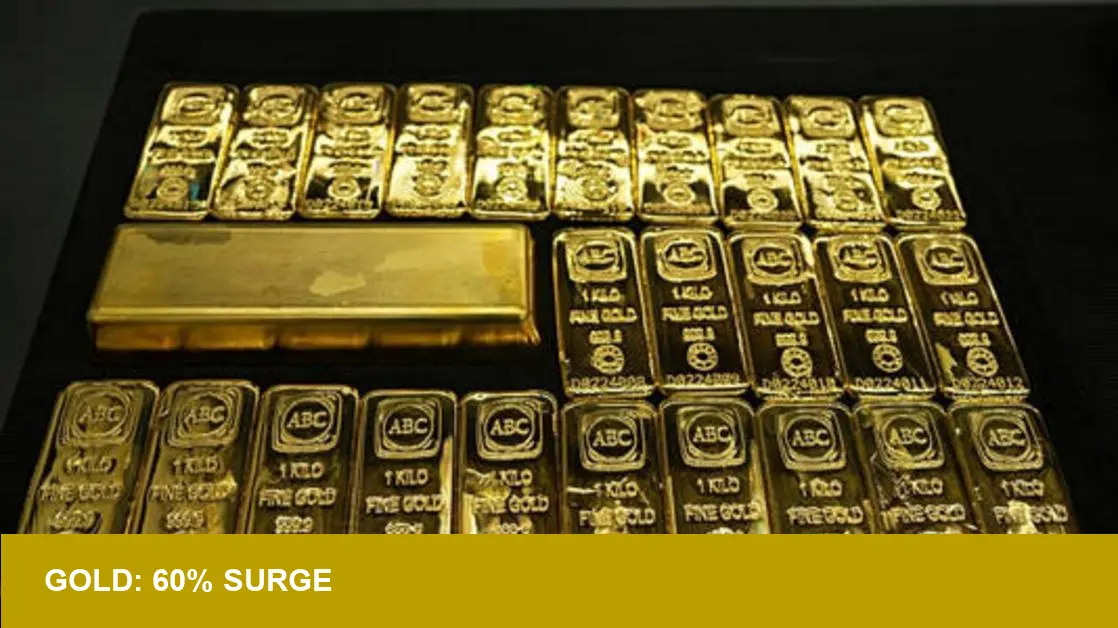
Gold’s advance through 2025 reshaped portfolios: bullion rallied roughly 60% as geopolitical risk, early-rate cuts and sustained central-bank purchases tightened available supply and pushed prices materially higher. For U.S. retailers and investors the question now is practical: how to price inventory, hedge exposure and position for a potential continuation of gains into 2026.
- Price (spot): Up ~60% in 2025 (end‑year levels)
- 2025 performance: Broad-based surge driven by safe‑haven flows
- Main drivers: Geopolitical risk, early rate cuts, central‑bank buying, ETF inflows
- Data as of: December 2025
Context — Why 2025 mattered
Gold’s metallic luster regained prominence after a period of muted momentum. The combination of declining real yields, policy easing, and elevated geopolitical uncertainty compressed the risk premium investors assign to non‑yielding assets. Central banks — a steady, strategic buyer — amplified that compression, while mined output and recycled flows failed to keep pace with demand, giving bullion a palpable, sustained heft in market psychology.
2026 outlook and market mechanics
Many analysts entering 2026 point to several mechanically supportive factors: further nominal rate cuts would reduce the opportunity cost of holding gold; continued central‑bank accumulation would remove available metal from the secondary market; and persistent geopolitical hotspots would sustain safe‑haven bids. Offsetting forces include a stronger U.S. dollar, an unexpectedly hawkish Fed, or a rapid normalization of risk appetite that redirects flows to equities.
Technically, the market is now more sensitive to liquidity. Exchange‑traded fund inflows move prices with a tactile immediacy — a few large allocations translate into a visible rise in the bid. For physical players, the market has a substantial heft: allocations toward ingots and minted bullion account for a larger fraction of flows than in prior cycles, increasing pressure on warehousing and logistical costs.
Impact — What this means for U.S. retailers and investors
Retailers: price discipline will be critical. Inventory acquired pre‑rally carries a built‑in margin; newly purchased stock must be priced to reflect both replacement cost and buyer sensitivity. Expect demand for heavier, sculptural pieces — gold’s tactile warmth and substantial heft are driving interest in statement cuffs and textured chains. Emphasize responsibly sourced and recycled gold to align with 2025’s sustainability preference among affluent buyers.
Investors: consider a layered approach. Allocate across physical bullion, ETFs and selective mining equities to capture different beta and volatility exposures. Hedging against a stronger dollar or an upside surprise in rates remains prudent: short‑dated options or tactical dollar pairs can cap downside without negating participation if the rally continues. Custody and liquidity planning should not be an afterthought — storage backlogs and insurance costs can erode real returns.
Bottom line: gold’s 2025 run was not a purely speculative spike; it reflected structural demand and a shift in macro expectations. For 2026, positioning should be deliberate — calibrated to policy paths, central‑bank behavior and the tangible supply constraints that give bullion its lasting, tactile value.
Image Referance: https://www.msn.com/en-us/money/markets/a-historic-year-for-gold-could-prices-climb-higher-in-2026/ar-AA1RYWxX?ocid=finance-verthp-feeds