
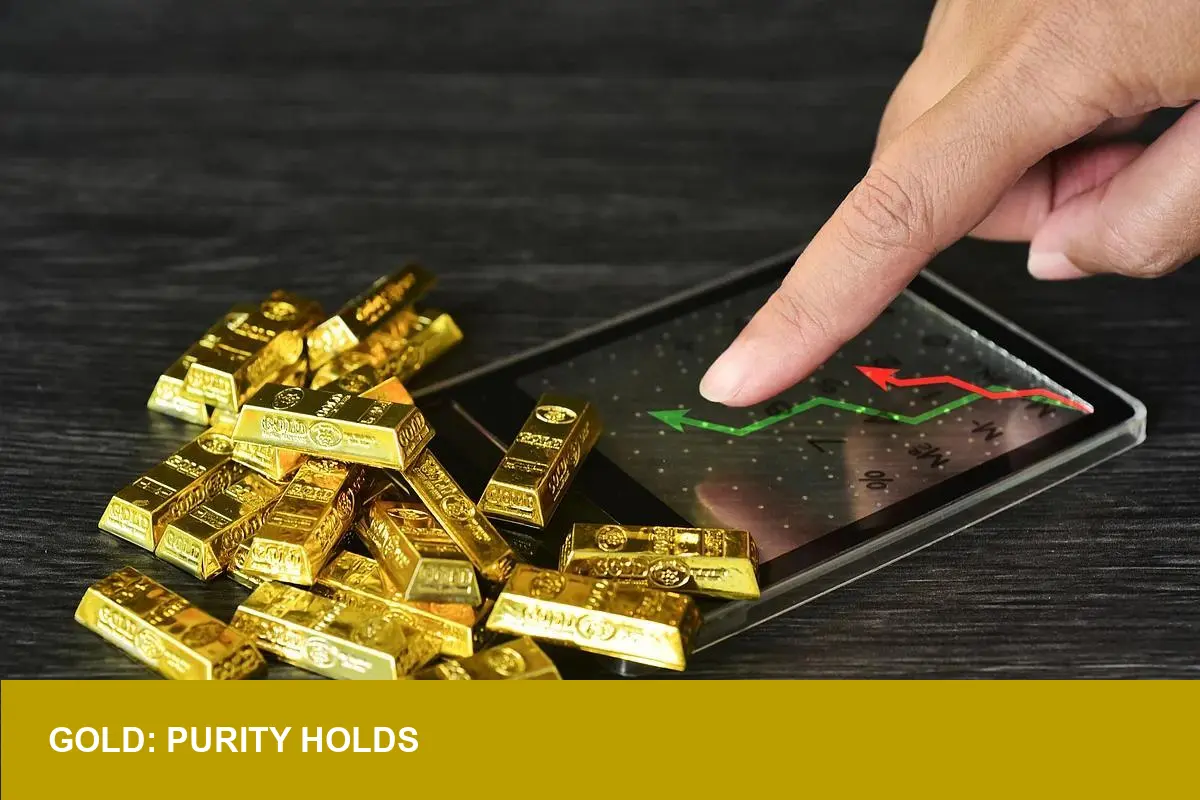
Second Headline: Deloitte finds Indian consumers preserving 22K–24K purity even as elevated per-gram gold costs drive purchases toward lighter, repeatable pieces — a shift that lifts investment intent to 86% and reshapes retail assortments.
- Price: Elevated per-gram levels across 2025–26 (persistent upward pressure)
- Carat weight: Common purchase purity range: 22K–24K; buyers resist lower karatage
- Origin: India consumer market (Deloitte South Asia study)
- Date: January 7, 2026
India’s affinity for gold remains tactile and investment-driven. Deloitte’s recent survey shows buyers are responding to higher gold prices not by diluting purity but by reducing weight — selecting pieces with a delicate silhouette and substantial perceived value, preserving the metal’s long-term store-of-value.
What the numbers say
One-third of respondents cut weight while keeping the same caratage; 19% increase budgets; a similar share uses exchange programs; only 17% move to lower-karat options such as 18K or 14K. Crucially, overall investment intent rose to 86% from roughly 50% the prior year — a structural change in consumer behaviour that treats jewellery as an asset class alongside mutual funds and equities.
Context: How this fits 2025 luxury and retail trends
The move toward lighter, everyday pieces dovetails with three 2025 trends that U.S. buyers and retailers should watch. First, sustainability and circularity: exchange and buyback programmes are functioning as informal recycling markets, circulating measured quantities of high-purity gold with a visible assay and hallmark — tactile proof that supports resale value. Second, sculptural aesthetics and stackability: designs that trade on delicate profiles, vitreous luster and stackable forms allow consumers to retain the ‘substantial heft’ of value while reducing gram weight. Third, diversification across metals: younger cohorts are adding silver and platinum to their jewellery baskets, yet gold remains the core investment vehicle.
Despite rising digital discovery, the category remains tactile. Over 80% of online transactions are sub‑₹50,000, while physical stores continue to close the majority of high-ticket sales — underscoring the importance of visible assay marks, warm patina finishes and in-person trust for high-purity items.
Impact: Why U.S. retailers and investors should care
For U.S. retailers, this is a playbook for assortment and messaging. Curate lighter-weight SKUs in 22K–24K hallmarked formats, promote certified buyback and exchange programmes, and emphasize purity as an investment credential — tactile cues such as assay cards, detailed hallmarking and weight-to-value messaging will convert price-sensitive shoppers. Merchandising should foreground stackable, sculptural pieces with measurable gold content rather than simply lower price points.
For investors and buying teams, inventory economics change: average unit value falls but frequency rises, shifting working-capital and margin profiles. Hedging strategies must account for a higher turnover of lower-gram SKUs and increased demand for authenticated pre-owned lines. Where possible, reinforce omni-channel funnels that push high-trust purchases back to stores for finalization.
Finally, product-development teams should monitor cross-category signals: lab-grown gemstones and alternative metals expand occasion use, but gold’s role as a wealth vehicle makes purity a durable selling point. The takeaway for U.S. market participants is clear — preserve proof of purity, re-calibrate SKU weight distribution, and treat gold as both a tactile luxury and an investable asset.
Quote (paraphrased): “If consumers see gold as a wealth-creation asset, high purity becomes non-negotiable,” says Praveen Govindu, partner, Customer Strategy, Deloitte South Asia.
Image Referance: https://www.fortuneindia.com/business-news/gold-is-still-king-but-high-gold-prices-push-buyers-to-lighter-jewellery-not-lower-purity/129239