
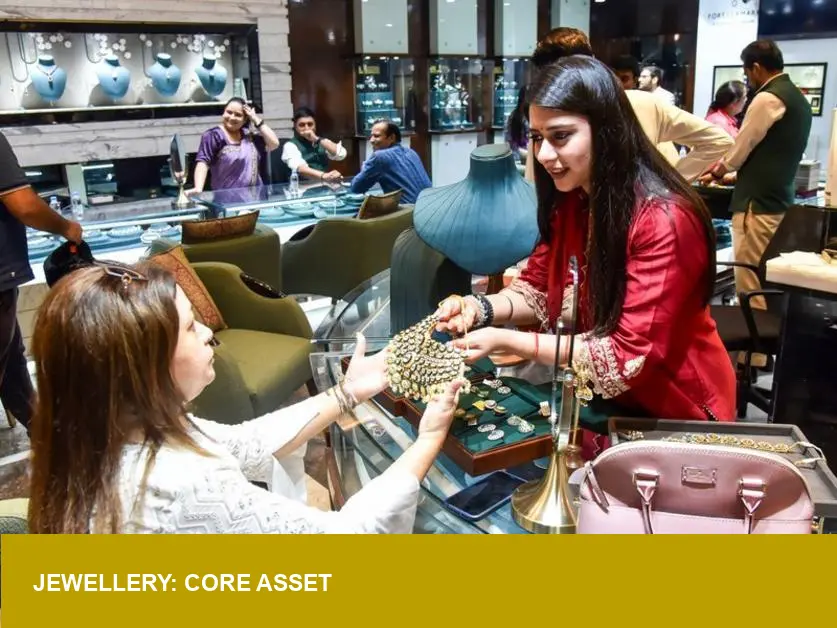
Deloitte’s India report: 86% of consumers now regard jewellery as a core wealth asset, a near parity with market-linked products, signalling portfolio reallocation and demand for lower-ticket, repeatable pieces.
- Price: Market shifting to accessible price points — silver and lightweight gold for everyday wear.
- Carat Weight: Preference for slender profiles; 49% of Gen Z favour lightweight, minimalist pieces vs 15% for heavy sets.
- Origin: Deloitte India report, published via IANS.
- Date: Jan 7, 2025.
Context: 2025 trends reshaping jewellery’s asset role
The headline figure — 86% — crystallises a broader reset. Jewellery is no longer confined to ceremonial vaults; it is entering portfolios as a tactile store of value that also serves daily utility. Consumers speak in material terms: the satin sheen of silver, the vitreous luster of polished gold, the substantial heft of a well-made signet — all as signals of both taste and capital.
Younger cohorts are the accelerant. Gen Z and millennials prioritise design agility, personalisation and accessibility, prompting a move toward silver and alternative metals (51% of Gen Z favour silver; 34% favour platinum). Demand is coalescing around repeatable, lower-ticket items — rings, chains and earrings — which supports higher purchase frequency and improves lifetime customer value.
These shifts sit alongside three 2025 vectors: sustainability, the growing credibility of lab-grown and alternative metals, and sculptural, wearable design. Retailers that interpret jewellery through those lenses can turn traditional heritage into a competitive edge rather than an anchor.
Impact for US retailers and investors
For US buyers and market participants the findings are instructive rather than parochial. The structural signals are universal: rising demand for everyday wearable value, younger cohorts reframing metal choice, and the persisting importance of in-store trust.
- Merchandise strategy: Increase allocation to silver and lower-gold-weight SKUs with contemporary finishes; prioritise modular pieces that layer without substantial heft.
- Pricing and margin: Emphasise accessible price points to capture repeat purchases; protect margin with design differentiation and customer-data underwriting rather than purely metal premiuming.
- Omnichannel confidence: Keep high-trust touchpoints in-store while accelerating frictionless digital discovery and data-driven replenishment.
- Operational leverage: Invest in inventory turns, SKU rationalisation and digital clienteling — operational excellence is the next growth lever.
In short, the market is not abandoning jewellery’s asset function; it is reframing it. That reframing — lighter profiles, alternative metals, frequent lower-ticket buys supported by trusted retail experiences — creates clear playbooks for US retailers and investors seeking exposure to secular consumption shifts.
— Deloitte/IANS
Image Referance: https://ianslive.in/86-pc-of-indians-see-jewellery-as-core-wealth-asset-gen-z-leads-shift–20260107115537