
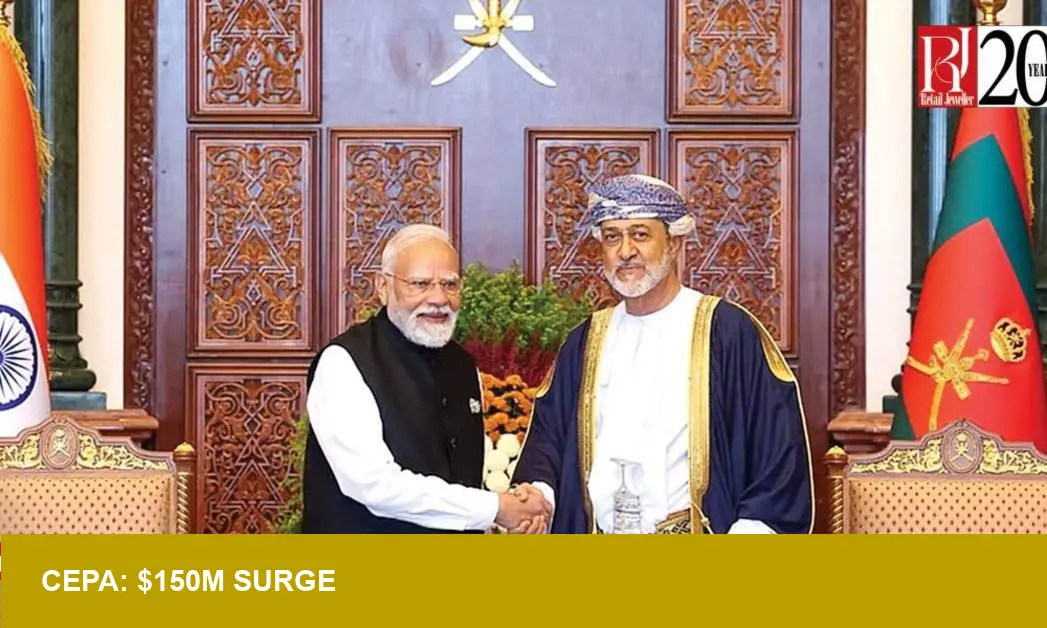
India’s CEPA with Oman is set to transform bilateral gems and jewellery trade, driving exports from $35M to an estimated $150M within three years and reshaping regional sourcing and margins.
- Price: Projected exports to Oman – $150 million (3-year forecast)
- Carat Weight: Primary focus — 22‑carat gold jewellery; polished diamonds (assorted sizes)
- Origin: India (Mumbai-led exports; GJEPC guidance)
- Date: 2025 (CEPA signed; implementation and tariff removal in effect)
What happened
The India‑Oman Comprehensive Economic Partnership Agreement eliminates customs duty on gems and jewellery imported into Oman from India. The Gem & Jewellery Export Promotion Council (GJEPC) and industry chairs say zero‑duty access will sharpen price competitiveness, encourage direct sourcing and expand product mix — lifting reported 2024 exports of about $35 million toward a targeted $150 million over three years. Kirit Bhansali, GJEPC chairman, highlighted expected gains across polished diamonds, 22‑carat gold wedding pieces and rising demand for silver and platinum items.
Context: 2025 market drivers
The pact arrives at a pivot point for the global jewellery trade. Three 2025 trends frame the opportunity:
- Sustainability and provenance: Buyers and global retailers are demanding traceable supply chains and lower footprint sourcing. Duty elimination accelerates compliant, direct shipments from India—making verified Indian manufacturing more attractive for sustainability‑conscious assortments.
- Lab‑grown diamonds and price stratification: As lab‑grown acceptance matures, margins on natural polished diamonds compress. Indian exporters can reposition product mixes — combining vitreous luster natural stones with cost‑effective lab alternatives to serve varied price bands.
- Sculptural and design‑forward jewellery: Demand for pieces with substantial heft, textured metalwork and pronounced form is rising. India’s scale in manufacturing and artisanal finishing positions the country to supply both volume and design‑rich items to GCC and African markets via Oman.
Why US retailers and investors should care
The CEPA is not just bilateral diplomacy — it recalibrates regional logistics, sourcing and competitive pricing in ways that matter to US market participants:
- Supply‑chain resilience: Oman’s stable regulatory environment and port links provide an alternative routing hub to the GCC and East Africa. US buyers can diversify inbound lanes and reduce exposure to single‑country bottlenecks.
- Cost and margin dynamics: Duty‑free flows into Oman lower landed costs for Indian product destined for regional markets. That can exert downward pricing pressure on comparable inventory sold into the US or create white‑label sourcing opportunities with improved margin profiles.
- Access to scale and design capability: Indian manufacturing offers a substantial heft of production capacity and fine finishing—from 22‑carat traditional wedding pieces to intricately sculpted platinum items—supporting private‑label programs and fast‑turn collections.
- Investment signals: Expect interest in joint ventures, contract manufacturing and distribution partnerships anchored in Oman. Investors tracking the gems and jewellery value chain should watch port logistics, duty‑drawback flows and emerging MSME tie‑ups.
Near‑term risks and trade mechanics
Implementation will determine the pace of change. Key variables include rules of origin, certification processes for precious metals and diamonds, and capacity at Oman’s customs and bonded facilities. If paperwork and origin verification are streamlined, the projected scale‑up is feasible; if not, gains may be phased over a longer horizon. For retailers, the immediate practical tasks are due diligence on provenance documentation and recalibrating landed‑cost models.
Outlook
For Indian exporters the CEPA reduces friction and enhances access; for Oman it positions the sultanate as a regional distribution node. For US retailers and investors, the agreement opens both opportunity and competitive risk: lower‑cost, design‑rich Indian product flowing through Oman can supplement assortments or compress margins, depending on strategy. Expect renewed activity in supplier audits, partnership bids and selective sourcing pilots through 2025.
Source: Retail Jeweller India reporting; statements from GJEPC and All India Gem & Jewellery Domestic Council (GJC).
Image Referance: https://retailjewellerindia.com/india-oman-cepa-set-to-quadruple-gems-and-jewellery-exports-to-oman-over-next-three-years/