
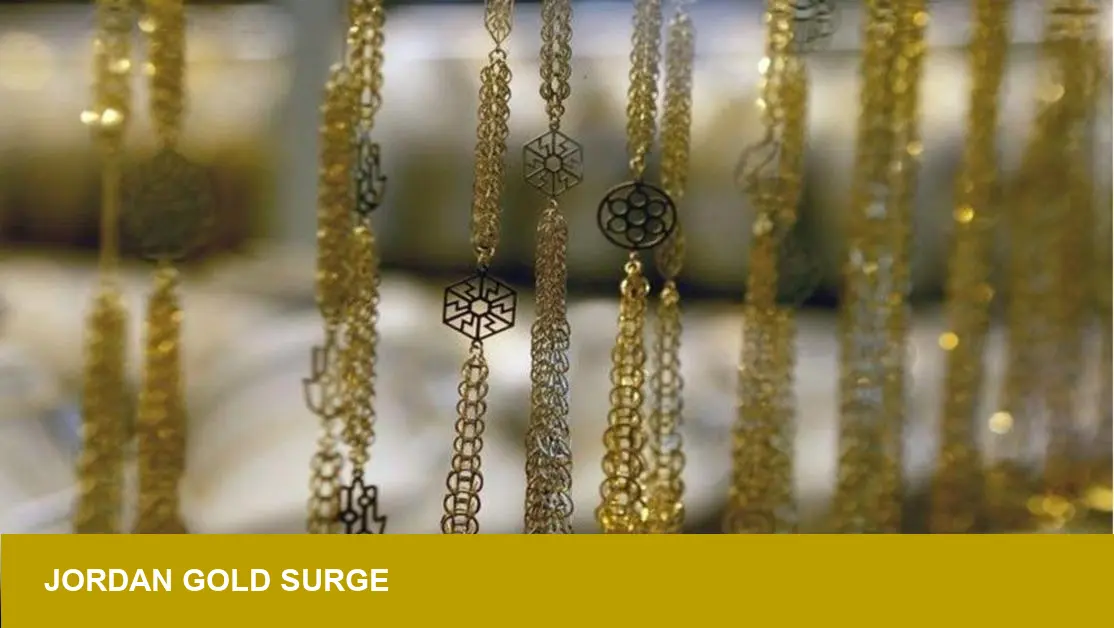
Lede: The General Syndicate of Owners of Jewelry and Goldsmith Shops reported a fresh uptick in Jordan’s gold market: the retail selling price for 21‑karat gold rose by 1.40 piastres to 90.5 Jordanian dinars per gram, widening the market signal for jewelers and investors tracking MENA bullion flows.
- Price: 90.5 JOD/gram (21K selling)
- Carat weight: 21‑karat (primary consumer grade)
- Source/Origin: General Syndicate of Owners of Jewelry and Goldsmith Shops (Jordan morning bulletin)
- Date: Latest bulletin, Tuesday
Market snapshot
The bulletin also lists retail selling prices for other purities: 24K at 103.2 JOD/g, 18K at 80.2 JOD/g and 14K at 62.5 JOD/g, while the syndicate quotes a buying price for 21K at 86.8 JOD/g. The palpable spread between buy and sell remains a working margin for local jewellers; its movement is a practical indicator of retail liquidity and consumer appetite.
Context in 2025: what’s driving the rise
Two structural dynamics are influencing price moves across the region. First, persistent demand for physically held gold in MENA markets is being reinforced by cautious consumer behaviour and continued appetite for pieces with substantial heft — a preference that favours higher‑karat, weight‑forward design. Second, macro factors — including commodity momentum and regional flows into bullion — are tightening local availability, nudging retail quotes upward. Unlike lab‑grown stones, gold’s intrinsic commodity value remains the primary determinant of retail pricing.
Beyond supply and demand, the retail spread (here approximately 3.7 JOD/g between listed sell and buy on 21K) functions as a barometer of market friction: narrower spreads can presage brisk secondary trade and faster inventory turnover; wider spreads point to constrained liquidity and higher working capital costs for shops.
Why US retailers and investors should care
For US fine‑jewellery retailers sourcing design‑forward gold pieces or holding imported inventory, the Jordan movement is actionable intelligence. Rising regional prices signal potential increases in landed costs for cross‑border buys and a need to reassess margin cushions. Tactile trends — customers favouring pieces with a warm, copper‑tinged glow and a substantial heft — also inform merchandising: heavier 21K and 24K forms will command premium pricing and slower inventory turns if local costs rise further.
For investors, short‑term arbitrage is limited by retail spreads and local taxes, but the uptick is a useful datapoint for regional bullion momentum. Monitor three metrics: retail buy/sell spreads, central bank and private reserve activity, and wholesale availability. These indicate whether a price shift is a transient retail repricing or the start of broader bullion appreciation.
Actionable takeaways
- Retailers: reprice imported inventory proactively; consider hedging through forward purchases or allocating a portion of assortments to lower‑karat, faster‑turn items.
- Investors: watch wholesale liquidity and spreads rather than headline retail quotes; physical holdings should factor in storage and trade costs in Jordanian dinars.
- Buyers: expect modest upward pressure on custom orders and exchanges where 21K pieces are preferred for their vitreous luster and weighty presence.
The Jordan bulletin is a concise market signal: modest but consistent upward momentum in retail gold pricing. For US market participants, the immediate imperative is practical — adjust sourcing assumptions, monitor spreads, and align assortments to the sculptural, weight‑forward preferences currently shaping regional demand.
Image Referance: https://www.jordannews.jo/Section-113/All/New-Surge-in-Gold-Prices-in-Jordan-47603