
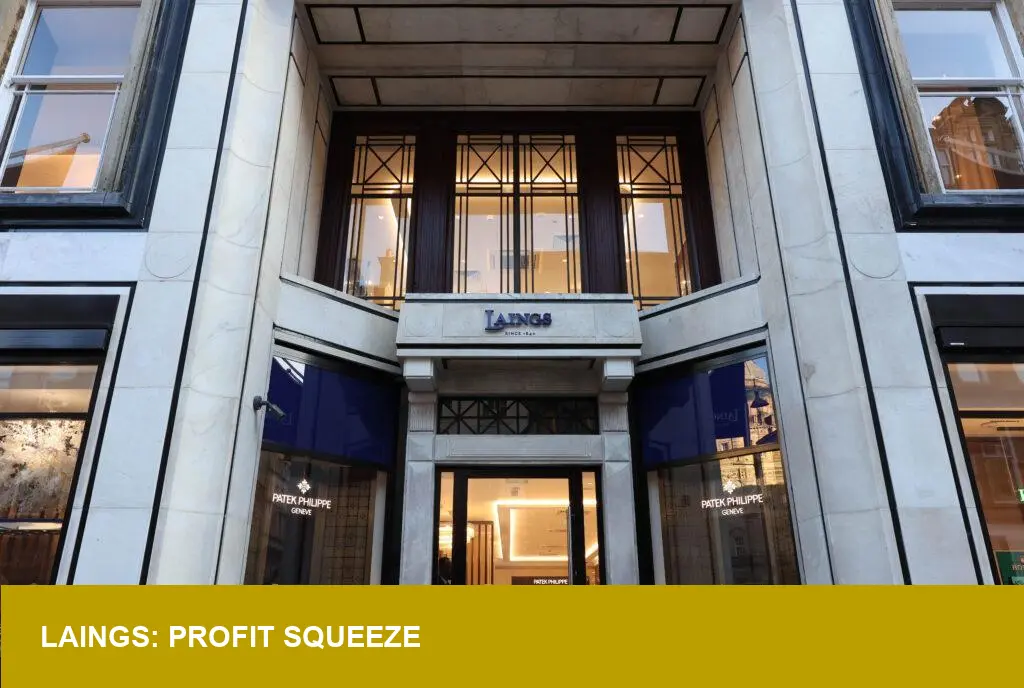
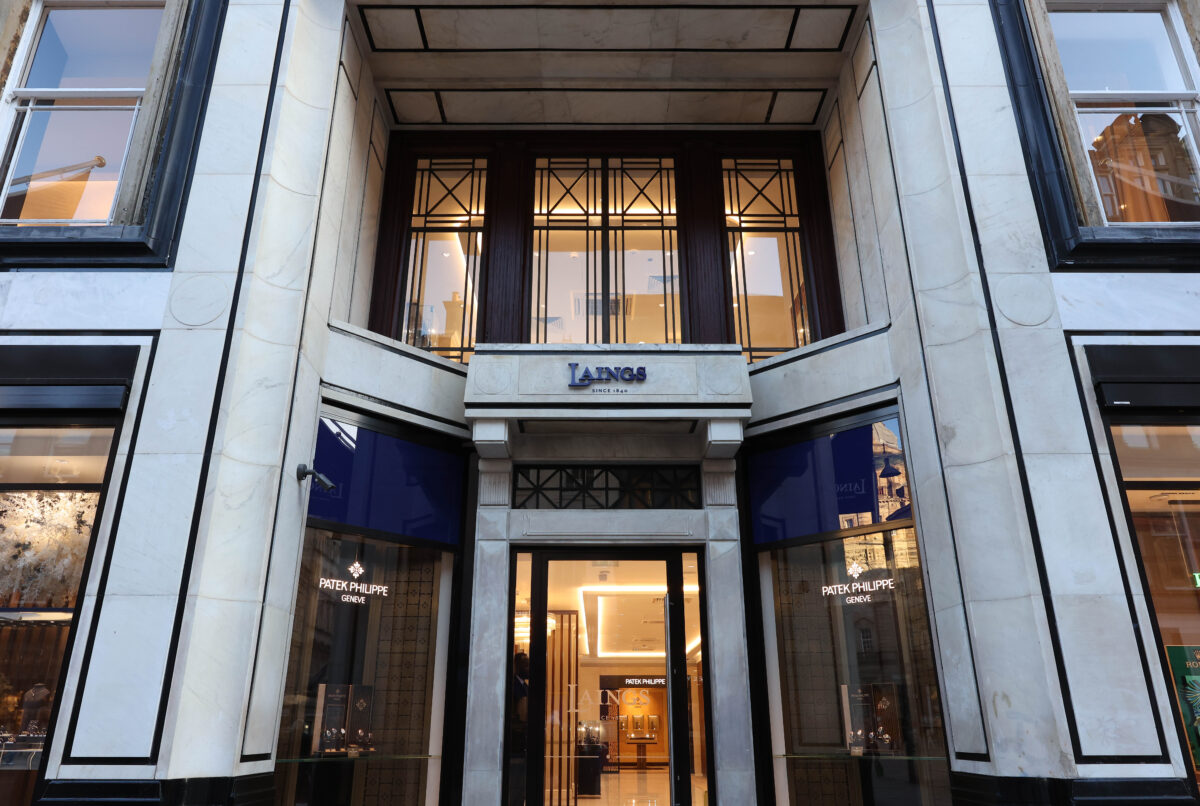
Laings recorded a 7.7% rise in revenue to £73.7 million for the 12 months to May 2025, driven by a full year of trading at its Rolex- and Patek Philippe-anchored Glasgow flagship — even as operating profit compressed to £1.9 million, signalling a continued margin squeeze.
- Revenue: £73.7 million (12 months to May 2025)
- Operating profit: £1.9 million (down >40%)
- Flagship: Buchanan Street, Glasgow (full-year trading)
- Sales growth: +7.7% year-on-year
- Peak profit: £5.8 million (2021–22)
The Numbers
Laings’ top line was bolstered by footfall and inventory turnover at the new Buchanan Street showroom, which combines a vitrified display aesthetic and a state-of-the-art service centre. The group now operates four large multibrand showrooms — Glasgow, Edinburgh, Cardiff and Southampton — alongside two TAG Heuer boutiques and an Omega showroom. Yet the substantial heft of recent investment and elevated customer-acquisition costs compressed margins for a third consecutive year.
Context — Luxury Retail in 2025
The pattern at Laings echoes wider 2025 trends: retailers are trading short-term profitability for curated retail environments and enhanced after-sales service. Shoppers now expect calibrated display lighting, tactile VIP salons and visible workshop capability — all capital-intensive. At the same time, demand has softened from the post‑2022 peak, pushing many operators to rebalance assortments toward fine jewellery, where unit economics and bespoke margins can outpace watch resale spreads.
Laings’ plan to prioritise its Exclusive Creations jewellery range and expand bespoke services aligns with a sector-wide pivot. That strategic tilt also responds to rising consumer interest in provenance and sustainable sourcing — areas where in-house production and tighter supply chains can deliver clearer margin control than the volatile secondary watch market.
Operational Moves
The business is continuing capex: a VIP upgrade in Southampton, a Cardiff refurbishment and expansion of the Edinburgh showroom into an adjacent acquired building. Management has flagged efficiency drives across retail operations and support functions, while emphasising that client experience will not be compromised.
CEO Joe Walsh framed the year as foundational: a full calendar of trading in Glasgow has established the showroom as a pillar of the city’s luxury corridor and as a service hub for both watches and fine jewellery.
What This Means for US Retailers and Investors
For US retailers, Laings’ results outline three practical signals. First, substantial showroom investment can drive top-line growth but may depress margins during the roll‑out phase — budget forecasts should model a multi‑year payback with visible service‑centre benefits. Second, shifting product mix toward in‑house fine jewellery can improve gross margin density: bespoke pieces and exclusive ranges carry a tactile premium that is less price‑sensitive than certain watch segments. Third, operational efficiency and staff training remain non‑negotiable; the customer who values vitreous luster and calibrated presentation also expects rapid, premium aftercare.
For investors, the compression in operating profit after several years of peak returns is a reminder that revenue growth secured by capex and marketing need not translate into immediate margin expansion. The longer runway for return on capital in premium retail places a premium on cash-flow visibility, service-centre utilisation and the ability to scale proprietary jewellery ranges.
Bottom Line
Laings has bought growth with investment — a calculated trade-off familiar to the best-positioned luxury retailers. The next 12–18 months will test whether the in-house jewellery push and ongoing efficiency measures can restore operating leverage and convert the showroom’s substantial physical presence into durable margin recovery.
Tagged: financial results, laings
Image Referance: https://www.watchpro.com/laings-sales-rise-to-74-million-but-profit-squeeze-continues/