
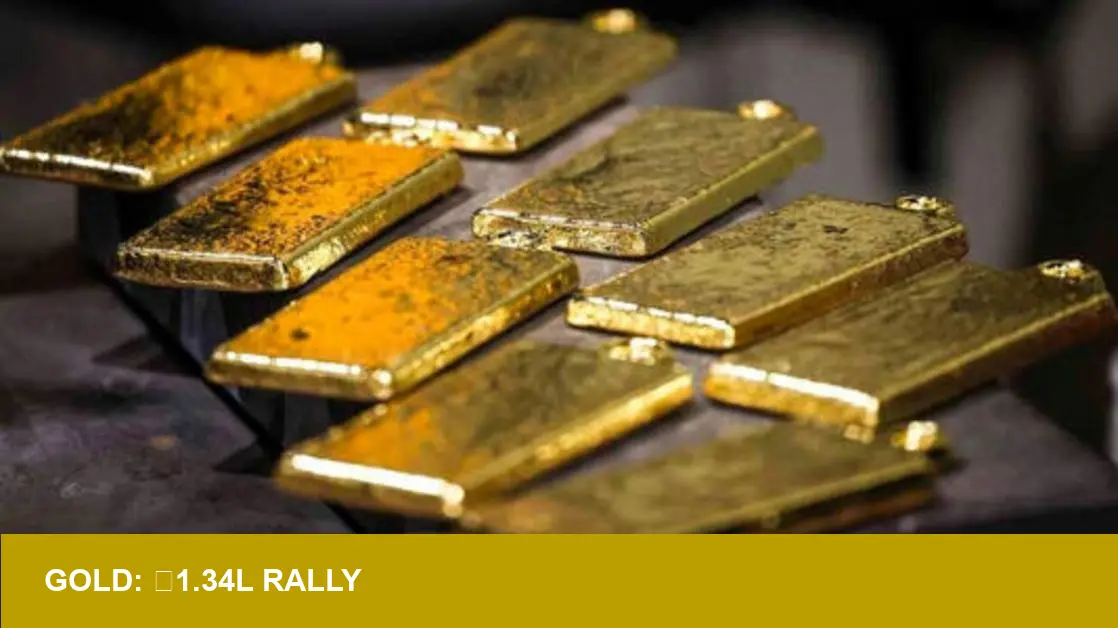
MCX gold futures climbed for a fifth consecutive session, with February contracts trading at ₹1,34,624 on Dec. 17, while silver surged to a record ₹2,06,111 per kilogram — a move driven by growing optimism around a US Federal Reserve rate cut and softer US economic prints that pushed real yields lower.
- Price (Gold): ₹1,34,624 — MCX February futures
- Price (Silver): ₹2,06,111 per kg (record high)
- Session: Fifth straight gain for MCX gold
- Date: Dec. 17
- Drivers: Fed-rate cut expectations, weak US data, geopolitical tensions
Market context
Lower US bond yields and a softer dollar have restored bullion’s appeal as a store of value. The price action on Dec. 17 reflects a classic liquidity-and-sentiment trade: expectations of easing monetary policy reduce the opportunity cost of holding non-yielding assets, while weak macro prints and geopolitical risk prompt portfolio flows into gold and silver. The move in silver — with its vitreous luster now commanding record nominal prices in India — also reflects tightness in industrial and investment demand.
Why this matters in 2025
Three 2025 dynamics frame the significance of these moves for the US jewellery and bullion markets. First, sustainability-led sourcing and recycled gold channels are altering supply elasticity; higher prices accelerate recycling, tightening available newly mined supply and adding upward pressure. Second, the relative value of precious metals is reshaping design choices: a preference for sculptural, weight-forward pieces gives gold’s substantial heft renewed retail appeal, while silver’s elevated price is changing its role from an entry metal to a design focal point. Third, macro policy — the timing of Fed rate cuts — remains the principal near-term determinant of flows into physical bullion and ETFs.
Practical impact for US retailers and investors
For US retailers, a sustained rally alters inventory and margin calculus. Higher wholesale metal costs compress margins on karat-priced items unless retailers reprice or shift assortments toward lighter, sculptural forms that showcase workmanship over raw metal weight. Inventory financing costs also rise if lenders reprice credit against bullion exposure.
For investors, the move signals a tactical window: lower real yields improve the case for bullion as a hedge against policy uncertainty and currency stress, but elevated prices increase entry risk. Tactical steps to consider:
- Stagger purchases (dollar-cost averaging) rather than front-loading inventories.
- Hedge large bullion holdings via futures or options where available, or diversify into ETFs to manage liquidity.
- For retailers, emphasize design premium and finish (patinas, hand-polished surfaces) to justify higher retail tickets without adding proportional metal weight.
What to watch next
Monitor upcoming US macro releases and the Fed’s communication for shifts in rate-cut probability. On the supply side, watch recycled-gold flows and Indian import data — both will determine whether this price move is a sustained repricing or a short-term sentiment-driven spike. For retail buyers and investors, the interplay of policy, supply elasticity and changing consumer aesthetics will determine whether bullion retains this momentum into 2025.
Image Referance: https://www.msn.com/en-in/money/markets/gold-rates-today-mcx-gold-gains-for-fifth-session-on-us-fed-rate-cut-optimism-silver-tops-2-06-lakh-per-kilo/ar-AA1Sx4aU