
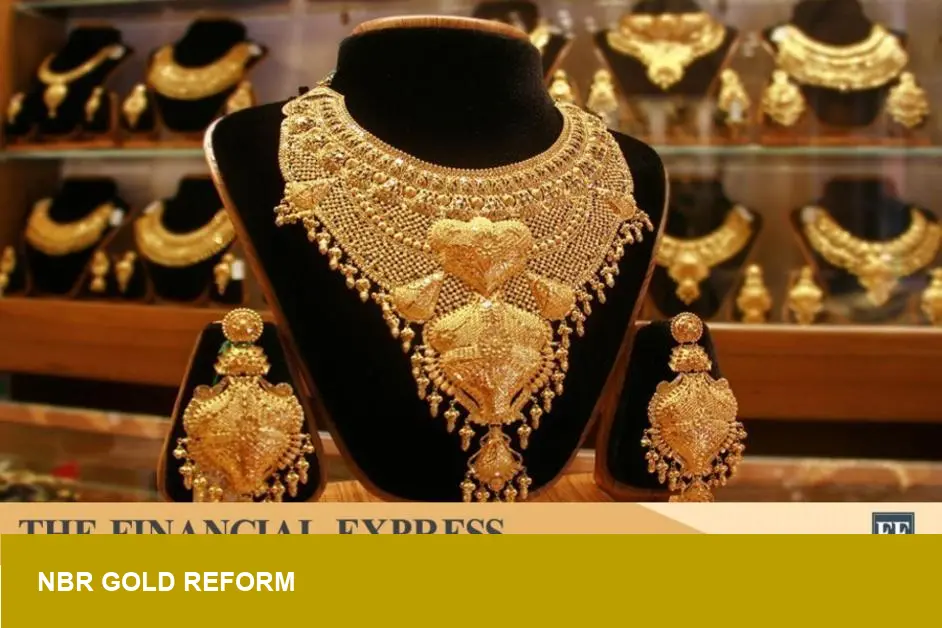
NBR chairman Abdur Rahman Khan has opened a policy window aimed at reintroducing discipline to Bangladesh’s gold and jewellery market — a market where rampant smuggling, a fragmented licence regime and high post‑import VAT has created a persistent premium of Tk 25,000–30,000 per bhori versus regional hubs. The change signals potential margin pressure and improved traceability for legitimate traders if the planned fiscal and digital measures proceed.
- Price gap: Tk 25,000–30,000 per bhori vs Dubai/Singapore
- Licences issued: 18 (at least 10 to non‑genuine traders)
- Tax change: phased removal of turnover tax in favour of profit‑based tax
- Meeting: NBR “Meet the Business” programme (Wednesday)
Context
The NBR’s remarks come amid long‑running distortions: most gold in the market arrives through unauthorised channels, banks are reluctant to provide credit to jewellers and a complex licence process has left many established merchants excluded. Mr. Khan said the authority will develop dedicated digital applications to capture transaction data — a form of digital fiscalization intended to replace the current, weighty turnover tax with assessments based on recorded profits.
Traders told officials that the 7.5% post‑import trade VAT and other levies widen the local price gap, pushing affluent buyers to purchase abroad. Bajus (Bangladesh Jewellers Association) leaders asked for VAT reduction to 2%, faster import clearance (7–10 working days), cancellation of inactive licences to broaden the importer base, duty‑drawback incentives for exports and removal of advance income tax.
There are also cultural and supply‑chain consequences: Bajus warned that an industry once employing hundreds of thousands of artisans in neighbourhoods such as Tanti Bazar and Shankhari Bazar has dwindled to an estimated 5,000–10,000 workers — a contraction that underscores lost artisanal capacity in handcrafted, lightweight jewellery prized for its vitreous luster and filigree work.
Impact for US retailers and investors
For US buyers and investors the implications are practical and strategic. A credible, digitally traceable import regime would reduce supply‑chain risk and make Bangladeshi suppliers more suitable for compliance‑sensitive retail programmes. Conversely, if restrictions persist and informal flows continue, the market will remain a source of arbitrage and reputational risk: large margins (the Tk 25k–30k premium) create incentives for illicit channels, while fragmented credit access constrains legitimate scaling and export readiness.
Potential outcomes to monitor:
- Policy tightening + digital traceability: lower illicit imports, improved provenance, thinner unofficial premiums — better for compliant sourcing.
- Licence reform and VAT relief: could revive formal imports and marginally reduce retail prices, supporting domestic manufacturing and export competitiveness.
- Failure to reform: sustained smuggling, constrained artisanal capacity, and ongoing price arbitrage that benefits illicit traders and offshore markets.
On balance, NBR’s roadmap — phased tax reform, a push for digital transaction records and clearer licence management — would align Bangladesh with 2025 trends in traceable precious‑metal sourcing and fiscal transparency. US retailers and investors should track the upcoming budget measures, the rollout of NBR’s digital applications and any operational changes at Bangladesh Bank that affect licence issuance and trade finance.
Image Referance: https://thefinancialexpress.com.bd/trade/steps-underway-to-bring-discipline-in-gold-jewellery-sector-nbr-chairman