
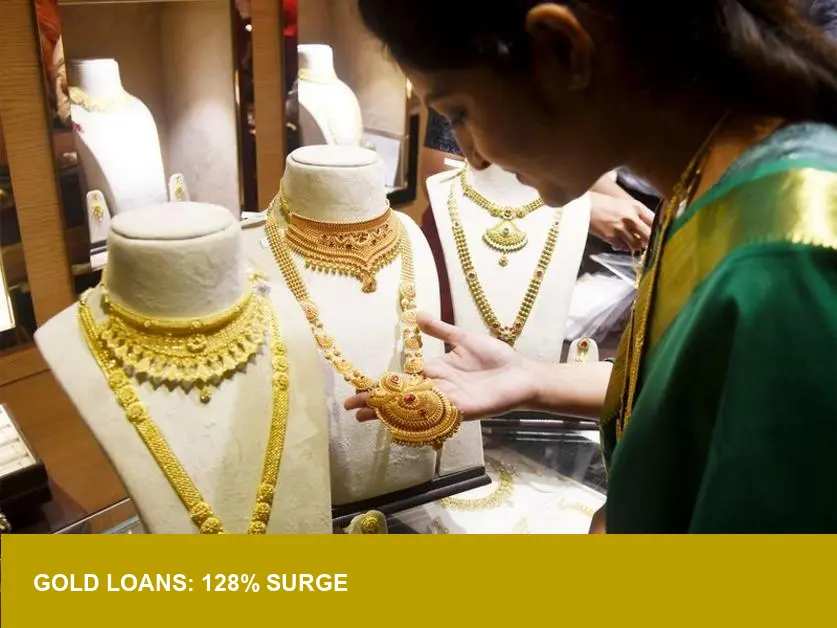
The Reserve Bank of India reports that loans secured by gold jewellery have recorded sustained triple-digit growth since February 2025, pushing outstanding balances to Rs 3.38 lakh crore by October 2025 and nearly doubling the segment’s share of non-food credit.
- Outstanding balance: Rs 3.38 lakh crore (Oct 2025)
- Growth: 128.5% year‑on‑year; triple‑digit gains since Feb 2025
- Source: RBI, State of the Economy — December 2025
- Trend window: Rapid increase over the past 12 months
Why the surge matters now
RBI data frame a clear behavioral pivot: households are increasingly converting the metallic heft of family jewellery into readily available credit. Elevated gold prices raise the loan value per gram, while softer interest-rate episodes and streamlined disbursal make gold-backed lending materially more attractive than unsecured personal credit. The result is a rapid re‑pricing of how traditional assets function as short‑term liquidity—less an ornament, more a portfolio ballast.
Context in the 2025 market
The rise in gold-backed loans dovetails with three 2025 dynamics. First, sustainability and circularity narratives have lifted the appeal of recycled, traceable precious metals as durable stores of value. Second, the compressing price trajectory of lab‑grown stones has nudged discretionary spend away from high‑ticket new diamond purchases toward monetizing existing metal assets. Third, sculptural jewellery trends—larger pieces with greater gram weight—mean many households now hold items with higher intrinsic loan value. Taken together, these shifts have increased both the supply of collateral and the appetite for asset‑backed borrowing.
Impact for US retailers and investors
For US jewelers and credit providers, India’s experience offers a practical template. Increased gold‑loan penetration signals potential changes in retail purchase cycles: consumers tapping collateral may delay new buys or, conversely, use loan proceeds to pay for short‑term seasonal inventory. Retailers should monitor local gold prices and customer liquidity signals (pawn/loan activity, trade‑ins) — they are early indicators of demand elasticity.
Financially, investors should treat rising gold‑loan volumes as both an opportunity and a risk. The upswing highlights a latent source of consumer credit demand that can support near‑term spending, yet exposes lenders and household balance sheets to gold‑price volatility. Institutions should consider tighter loan‑to‑value (LTV) floors, faster haircuts when gold hits cyclical highs, and stress tests that assume a swift price correction.
What to watch next
The RBI notes the segment’s exposure remains contained for now but is under close monitoring due to its sensitivity to price swings. For US market participants, the practical takeaways are straightforward: track gold‑backed lending trends abroad, treat jewellery as a liquid asset class in consumer finance models, and prepare operationally for higher turnover in trade‑ins and collateral management if similar household behavior takes hold domestically.
In sum, the RBI bulletin is a reminder that the physical heft of metal can quickly translate into systemic credit flows—an understated, tactile shift with clear implications for retail strategy and credit risk frameworks.
Image Referance: https://www.tribuneindia.com/news/business/loans-against-gold-jewellery-recorded-triple-digit-growth-rates-since-february-2025-rbi-bulletin/