
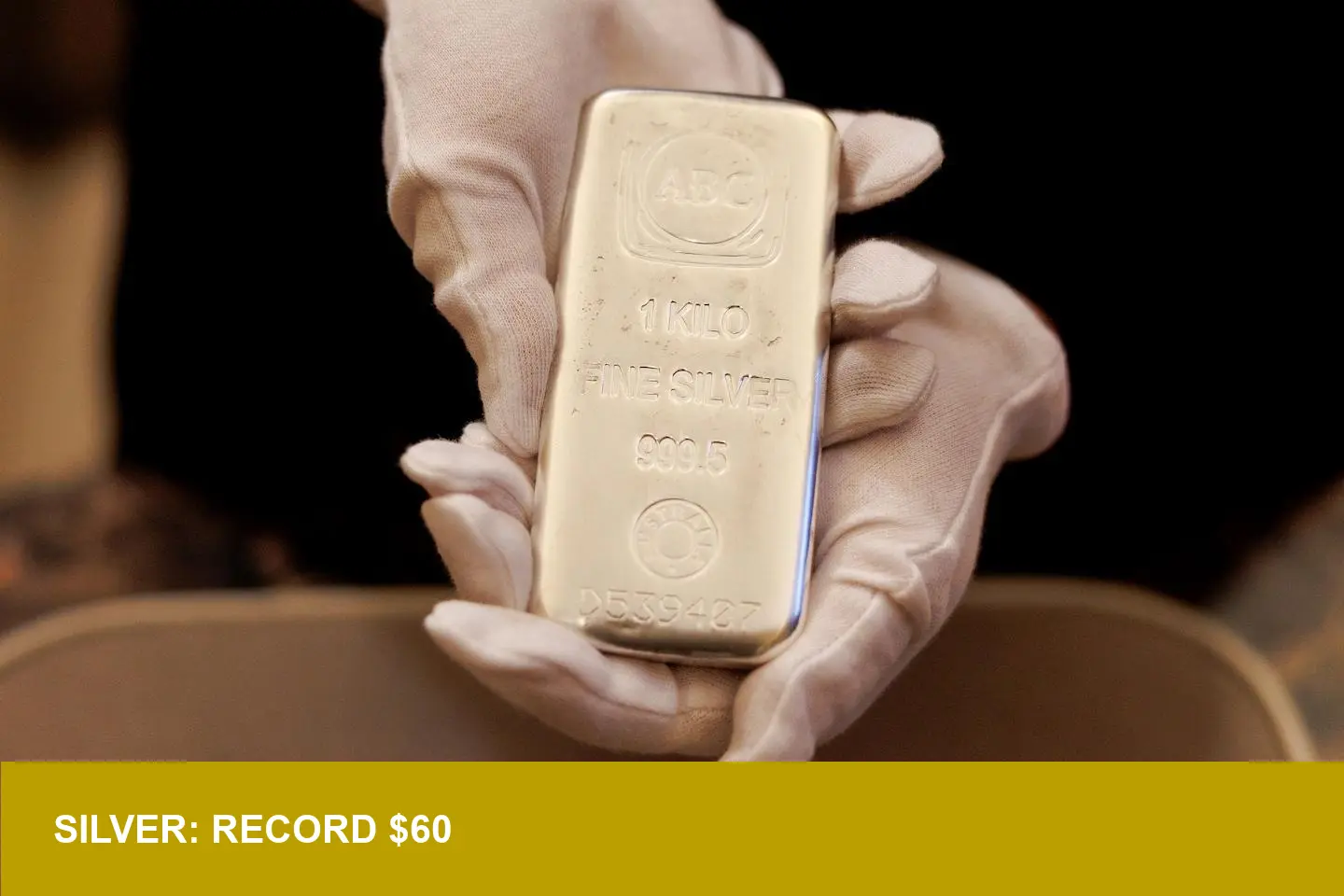
Silver has broken above $60 per troy ounce and doubled in value this year, forcing a repricing across industrial supply chains and retail inventories. The commodity’s 102% gain in 2025—outpacing gold and most equity indices—has immediate consequences for margins, inventory valuation and hedging strategies for U.S. retailers and investors.
- Price: Above $60 per troy ounce (intraday high).
- Unit: Troy ounce; market moved 102% YTD (2025).
- Primary drivers: EV battery and data‑center demand, solar contact applications, tariff risks.
- Date: December 9, 2025 (record print on NY commodity exchange).
The Context: Industrial Demand and Policy in 2025
The advance is not purely speculative. Silver’s cold, metallic sheen has become an industrial input—its high electrical conductivity and vitreous luster make it indispensable in EV wiring, photovoltaic contacts and high‑throughput data‑centre components. Those structural demand drivers, amplified by stimulus for clean energy and constrained mine output, collided with new tariff talk in 2025 to produce sharply compressed supply/demand margins.
At the same time, the market’s technical profile has changed: thinner market depth in refined bars and higher mobilization of recycled metal mean price moves are more acute. The result is greater intraday volatility and a higher cost basis for any business that uses silver as a raw material.
Why This Matters to U.S. Retailers and Investors
For fine‑jewellery retailers, the rise translates into a palpable increase in replacement cost and a reassessment of assortment. Large, sculptural silver pieces—valued for substantial heft and tactile presence—will command higher wholesale invoices. Sellers should expect tighter margins on sterling stock unless they recalibrate price lists or absorb costs into service fees.
Investors face a bifurcated thesis. Silver’s role as both an industrial metal and a monetary proxy gives it asymmetric upside when supply constraints meet green‑tech demand, but also asymmetric downside if macro liquidity tightens. The current run positions silver as a potential inflation hedge and a capital‑allocation trade rather than a passive safe haven.
Practical Actions — For Stores and Capital Managers
- Retail pricing: Reprice heavy silver pieces by cost‑plus with a band for volatility; consider limited surcharges tied to COMEX benchmarks.
- Inventory strategy: Increase turnover on high‑exposure silver lines; favor recycled sterling suppliers to reinforce sustainable sourcing claims and reduce exposure to mining supply shocks.
- Hedging: Small‑scale producers and chains should explore forward contracts or options on COMEX to lock in cost for critical buys.
- Customer messaging: Emphasize verified recycled content and the tactile quality—dense profiles and vitreous luster—to justify price movement to discerning buyers.
Silver’s record is both a reminder and a pivot: the metal’s industrial utility, combined with shifting policy and supply dynamics in 2025, makes price risk a real operating consideration for U.S. jewelers and a tradable story for investors. The market’s next phase will depend on how quickly manufacturers substitute, recyclers mobilize, and policymakers act on tariffs and clean‑tech incentives.

Image Referance: https://www.washingtonpost.com/business/2025/12/09/record-silver-price-economy/