
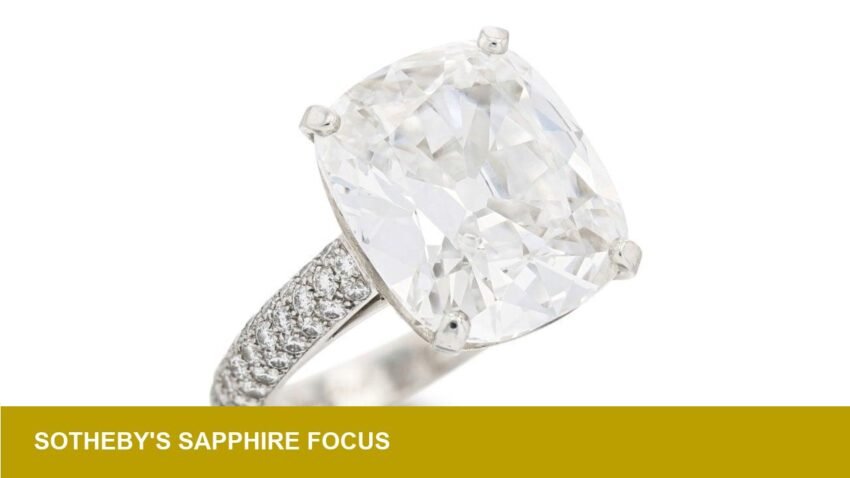
Sotheby’s will present an unusually sapphire‑heavy lineup at its upcoming Paris jewelry sale: six of the auction house’s top 10 lots feature sapphires, a concentration that is likely to focus bidder attention and has implications for pricing and inventory across the high‑end colored‑stone market.
- Auction house: Sotheby’s.
- Venue: Paris; event: upcoming Sotheby’s jewelry sale.
- Top lots: six of the top 10 pieces feature sapphires.
- Category: high jewelry / collectors’ market.
- Market focus: colored stones attracting auction demand.
Context: what this says about colored‑stone demand
Auctions have increasingly pivoted from pure diamond narratives to curated presentations of rare colored gems. That six of Sotheby’s ten headline lots in Paris are sapphire‑led underlines a broader shift: buyers at the upper end are seeking color, saturation and craft as alternatives to classic white diamond lots. Sapphires offer tactile virtues—deep saturation, strong vitreous luster and substantial heft when mounted—that translate well in both image and room bidding.
For dealers and consignors the appeal is twofold. Visually arresting sapphires read clearly in catalogues and online lots; technically, their grading hinges on hue, tone and clarity rather than the strictly codified 4Cs used for diamonds, which changes how provenance, cutting and setting are communicated to bidders.
Impact: what US retailers, wholesalers and investors should watch
For US buyers and resellers, Sotheby’s sapphire emphasis is a timely signal. Retailers may consider allocating a greater share of buying budgets to proven colored stones—sapphires that show vivid saturation and clean table appearance—rather than assuming diamonds will always lead price appreciation. Wholesalers should be ready to respond to short‑term lift in demand for higher‑quality rough and cut sapphires and to tighten assortments accordingly.
Investors and auction‑watchers should read the line‑up as directional rather than definitive: a cluster of sapphire headline lots concentrates attention and can lift realized prices within that sale window, but it does not, on its own, establish a market‑wide repricing. Still, the persistent interest from collectors at major houses increases the premium on well‑documented stones with clear provenance and precise cutting that maximizes color saturation.
Finally, merchandising and marketing in the US will need to reflect the auction story. Quiet‑luxury messaging that stresses traceable origin, established grading approaches for colored stones, and close photography that shows color depth and setting details will better align inventory with collector expectations following the Paris sale.
Image Referance: https://rapaport.com/news/sapphires-star-in-sothebys-jewelry-sale/