
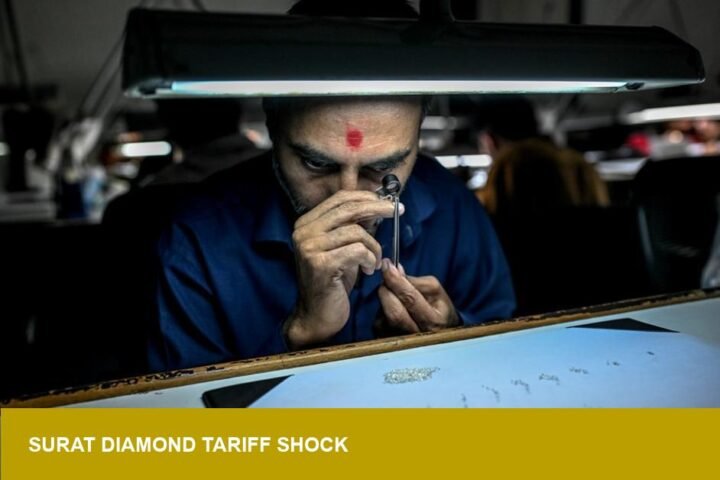
Surat’s diamond bourse has fallen silent after a series of tariffs imposed last year by US President Donald Trump — at one point as high as 50% on exports — a measure that has proven to be the final blow to trading activity in the city that supplies a large share of global cut and polished goods.
- Location: Surat, India — major cutting and polishing centre
- Policy trigger: US export tariffs imposed last year, up to 50% on some shipments
- Immediate effect: trading halls largely empty; order flows disrupted
- Market region: India–US trade corridor; impact on exporters and US buyers
- Timing: tariffs enacted last year; downstream effects observed in the current trading window
Context: trade friction and margin pressure in the diamond supply chain
The intervention on exports amplified pre-existing pressures across the diamond pipeline. Cutting and polishing workshops in Surat operate on tight margins; an abrupt tariff increases landed on top of thin pricing spreads and inventory carrying costs. For finished goods — particularly smaller calibrated sizes and polished-brilliant melee that feed the US retail supply chain — added duties translate directly into higher landed costs and compressed wholesale margins.
That mix of policy friction and margin squeeze has reduced the willingness of global buyers to travel and transact in the traditional trading windows. With shipments facing punitive duties, consignments that once moved quickly through Surat now sit in warehouses or are rerouted, altering normal cadence of replenishment for US bridal and fashion jewelers.
Impact: what US retailers, wholesalers and investors should consider
For US retailers and wholesalers the immediate implications are operational and commercial. Expect potential disruptions to lead times for polished inventory and upward pressure on wholesale prices for affected SKUs unless suppliers absorb duties — a move that would erode already slim margins at the cutting houses.
Practically, merchants should reassess sourcing and inventory strategies: tighten sell‑through assumptions on items reliant on Surat supply, extend lead times in merchandising plans, and review payment terms with suppliers. Merchants selling to value‑sensitive bridal customers will need clearer margin math and transparent cost narratives; for higher‑end segments, emphasize provenance and craftsmanship to justify any price adjustments.
For investors and category buyers, the episode underscores geopolitical risk in a highly concentrated supply base. Diversifying supplier geographies, revisiting contractual duties and insurance clauses, and monitoring policy developments in real time will be necessary to manage exposure until trade flows stabilise.
Image Referance: https://www.deccanchronicle.com/business/economics/diamond-slump-leaves-indias-surat-bourse-empty-1944887