
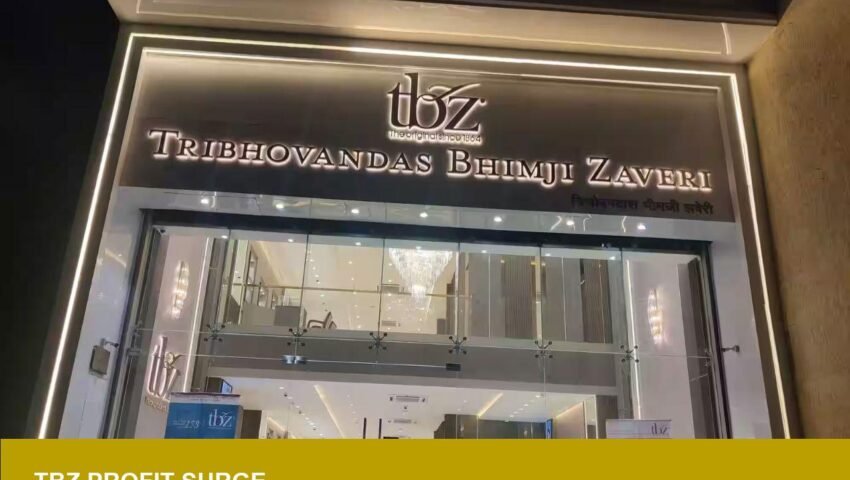
Tribhovandas Bhimji Zaveri (TBZ) shares climbed 8.39 percent after the company released its December quarter (Q3 FY26) results, reporting a 169.94 percent year‑on‑year increase in net profit. The market move reflects a profit‑driven reappraisal of the jewellery retailer’s near‑term momentum.
- Share move: +8.39 percent on announcement
- Net profit: +169.94% YoY (Q3 FY26, December quarter)
- Product mix: gold, diamond, platinum, silver ornaments
- Categories: studded jewellery — bangles, rings, necklaces, mangalsutras
- Company focus: organised jewellery retail and studded collections
Context: where this sits in 2025–26 market trends
The scale of TBZ’s profit improvement sits squarely with a broader recalibration across organised jewellery retail. For retailers and wholesalers, the numbers underline renewed consumer willingness to trade up within core categories — particularly studded and bridal assortments — rather than a shift to novelty or fast‑fashion accessories. From a product perspective, demand is strongest for pieces that convey material quality: well‑finished 18k and 22k gold surfaces, satin‑finished gold chains, micro‑pavé diamond treatments and balanced silhouettes that offer substantial heft without overt ornamentation.
For investors tracking sectoral multiples, the result also highlights how earnings volatility in jewellery retail can re‑rate a stock quickly when inventory turns and gross margins improve. TBZ’s announcement is an earnings‑led trigger rather than a product launch or strategic M&A — the kind of data point that investors use to fine‑tune exposure to retail names within luxury and consumer discretionary portfolios.
Impact: what US retailers, wholesalers and investors should watch
US buyers and multi‑market wholesalers sourcing from India should note three operational implications. First, a profit surge at a large organised retailer can presage tighter availability on commercial gold and studded items as domestic retail channels prioritise replenishment, which can affect lead times and landed cost assumptions. Second, margin expansion at TBZ suggests pricing elasticity in higher‑end bridal and studded segments — a cue for US merchants to test selective price increases on knife‑edge shank rings and micro‑pavé necklaces where craftsmanship is evident.
Third, for investors, the move reiterates the importance of quarter‑by‑quarter earnings in gauging retail resilience versus longer‑term thematic bets (sustainability, lab‑grown adoption). TBZ’s Q3 result is a short‑term, profit‑driven signal; portfolio managers should reconcile such episodes with inventory days, gross margin trends and store‑level productivity before repositioning exposure.
In practical merchandising terms, brands and retailers can lean into tactile storytelling — referencing quality finishes, stone setting techniques and metal purity — to justify premium pricing in a quiet‑luxury environment where subtle craftsmanship, not overt branding, drives purchase decisions.
For now, TBZ’s Q3 performance is a clear near‑term positive for the organised jewellery segment; the market will watch subsequent quarters to see whether this profit spike translates into sustained margin improvement and inventory discipline.
Image Referance: https://tradebrains.in/tribhovandas-bhimji-zaveri-share-price-soars-8-after-robust-q3-fy26-results/