
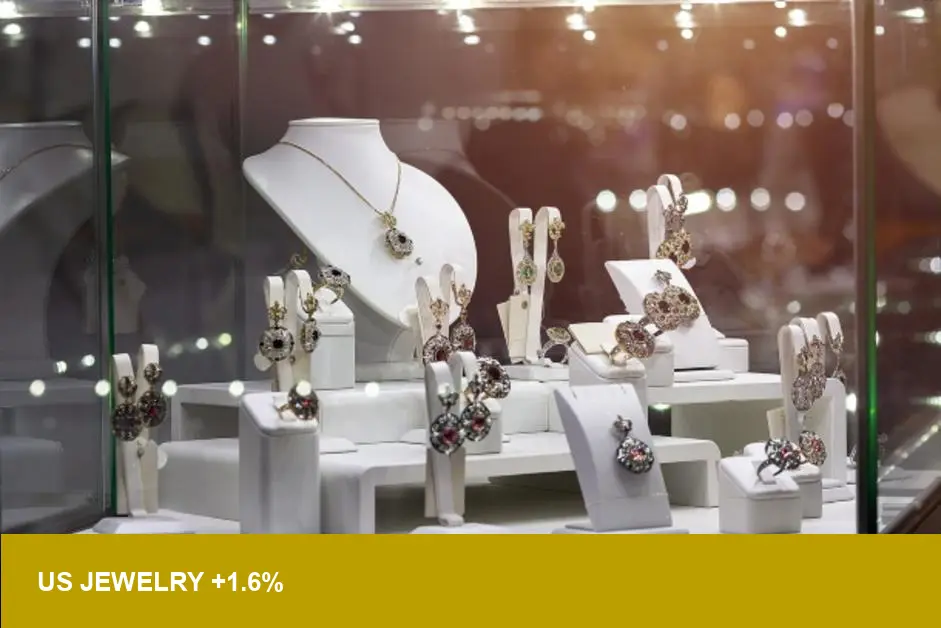
Mastercard data: US jewelry sales grew 1.6% in the 2025 holiday period, modestly ahead of 2024 and well below overall retail gains — a measured signal for retailers and investors managing inventory, margin and promotional cadence.
- Holiday growth: +1.6% (Jewelry)
- Overall retail (ex-auto): +3.9% (Nov 1–Dec 21, 2025)
- Source: Mastercard SpendingPulse / Michelle Meyer
- Published: Jan 7, 2026
Context — measured demand amid steadier prices
The 1.6% rise in jewelry sales during the 2025 holiday window reflects a market with tactile, considered purchases rather than broad-based spending. Mastercard’s SpendingPulse — which aggregates in-store and online transactions across payment types — shows consumers prioritized meaningful items and leveraged promotions while blending channels to optimize convenience. Stable inflation and a quieter price environment supported that behaviour, giving discretionary items a more substantial heft than last year’s shoppers assigned to fleeting trends.
Why this matters now
Two numbers frame the commercial implication: jewelry’s 1.6% uptick versus a 3.9% gain for overall retail. That gap points to selective demand and margin pressure for jewelers who matched general retail promotional intensity. For US retailers, the immediate levers are inventory rotation and promotional timing — slow-moving lines should be re-priced or remerchandised, while high-velocity categories warrant replenishment to retain share.
Signals for assortments and product strategy
In practice this season’s behaviour supports three operational changes. First, emphasize pieces with visible, tactile qualities — weight, finish and secure settings that communicate value on the shop floor and in photos. Second, maintain an omni-channel fulfillment posture: shoppers combined online discovery with in-store verification, so elastic fulfillment options (reserve & collect, extended returns) reduce friction. Third, refine promo cadence: measured, targeted discounts preserved margin better than blanket markdowns.
Investor and wholesale implications
For investors and suppliers the modest gain is a signal to recalibrate rather than accelerate. Inventory turns remain the primary operating metric; slower-than-average growth suggests conservatism in forward purchases, especially for legacy diamond lines where lab-grown alternatives continue to pressure price points. Retailers with clear provenance messaging and visible craftsmanship (a vitreous luster in gem photography, secure clasp engineering on high-ticket items) can command premium placement and steadier sell-through.
Quote and methodology
“Consumers demonstrated flexibility and confidence this season, shopping early, leveraging promotions and investing in meaningful experiences and wish‑list items,” said Michelle Meyer, chief economist at the Mastercard Economics Institute. Mastercard SpendingPulse measures in-store and online retail sales across cash, checks and card payments for the stated holiday window.
Bottom line for US retailers
The holiday uptick was modest but instructive: demand exists for jewelry that reads as durable and valuable on contact. Retailers should trim overexposed assortments, selectively promote high-margin lines and maintain omni-channel convenience to convert cautious buyers. For investors, the data supports a barbell approach — favor operators controlling inventory tightly and demonstrating pricing discipline while remaining alert to category shifts from lab‑grown diamonds and sustainability-linked claims.
Image Referance: https://www.idexonline.com/FullArticle?Id=51032