
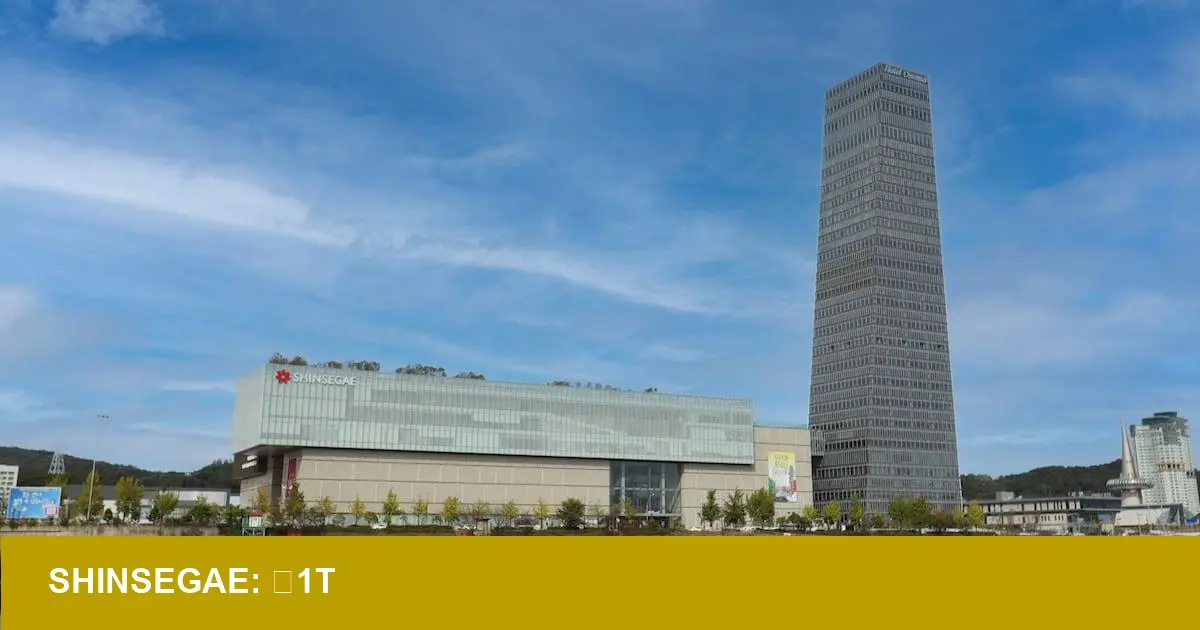
Daejeon Shinsegae has become the first store in its region to record cumulative sales of ₩1 trillion, driven largely by a luxury assortment that now accounts for 40% of turnover. The milestone—reached as of Dec. 21, 2025—marks a rapid commercial climb since the store opened in August 2021 and positions Shinsegae as the department-store group with the most branches exceeding ₩1 trillion in annual sales.
- Price: ₩1,000,000,000,000 (cumulative sales, 2025 YTD)
- Carat Weight: Luxury category = 40% of total sales (not literal carats)
- Origin: Daejeon Shinsegae (opened August 2021)
- Date: Sales reported through Dec. 21, 2025; article published Dec. 22, 2025

Context — Provincial Luxury and 2025 Retail Signals
The leap to ₩1 trillion is not an isolated spike but the culmination of a deliberate strategy: introducing full-category luxury—Gucci, Bottega Veneta, Bulgari, Vacheron Constantin, Jaeger‑LeCoultre, IWC, Van Cleef & Arpels—into a non‑capital market and building an experiential offer that registers in both transaction value and footfall. The result is measurable: Daejeon department‑store sales rose from roughly ₩996 billion before the store opened to ₩1.8754 trillion in 2024, nearly doubling the city’s commercial turnover.
Operationally, Shinsegae reports a 7% year‑to‑date sales growth through Dec. 21, 2025. The luxury mix—where a watch’s substantial heft and a jewel’s vitreous luster translate into higher average transaction values—has reshaped category economics for an entire regional market.
2025 Trends at Play
Three broader currents in 2025 intersect here:
- Sustainable desirability: Consumers are gravitating to brands that articulate material provenance and long‑term service—after‑sales care for mechanical watches and traceable gemstones now factor into purchase decisions in regional stores.
- Lab‑grown and secondary markets: While lab‑grown stones remain a small share of high‑value jewelry in Korea, the resale and certified pre‑owned channel is reinforcing total category demand, shortening replacement cycles for prestige watches and jewels.
- Sculptural merchandising: Larger boutiques and gallery‑like shop floors convert visual weight into perceived value—the physical heft of flagship displays and curated vitrines is working as a sales catalyst outside metropolitan cores.
Impact — Why U.S. Retailers and Investors Should Watch
For U.S. brands and investors, the Daejeon result is a clear signal: provincial markets in Asia can sustain full‑price luxury if the assortment and in‑store experience are calibrated to local affluence. Practical takeaways:
- Inventory allocation should shift from metro‑only models. High‑ticket watches and jewelry placed in regional flagship environments convert at higher average sales per customer than mass categories.
- After‑sales and warranty services are revenue multipliers. Brands that provide visible, onsite servicing shorten purchase hesitation and increase lifetime value.
- Omnichannel and appointment‑driven selling matter. In markets where footfall is seasonal, curated appointments and localized marketing maintain velocity without overexposure.
- Capital deployment: Investors evaluating retail footprints should value regional flagship openings not merely as brand displays but as long‑term cash generators—Shinsegae now counts nearly half its active branches above the ₩1 trillion threshold.
In short, Daejeon’s milestone reframes how luxury reaches consumers beyond capital cities: through carefully scaled assortments, material storytelling, and service‑led selling that together produce durable, quantifiable revenue.
By Lee Mi‑ji. Source: Shinsegae Department Store; translated and adapted for an international audience.
Image Referance: https://www.chosun.com/english/industry-en/2025/12/22/LTZWYEU65ZCBBEDZP62HLKRVSA/