
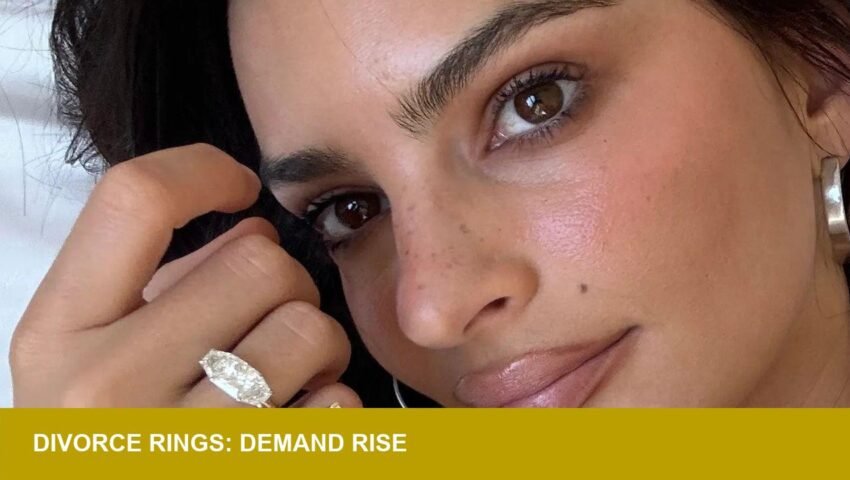
Divorce rings, a category popularised by celebrities including Emily Ratajkowski, are registering a clear uptick in interest, jewellers report. Market movement is driven less by showy gems than by a demand shift toward small, wearable bands worn as post‑marriage signals — typically placed on the middle finger — creating a merchandising and inventory opportunity for retailers focused on low‑profile, high‑turn SKUs.
- Who: Divorce rings, popularised by Emily Ratajkowski
- Placement: commonly worn on the middle finger (headline quote)
- Reported by: jewellers noting growing consumer interest
- Design profile: small, minimalist bands; bridal‑adjacent styling
Context: Where this fits in current jewellery trends
The divorce‑ring phenomenon aligns with a broader shift toward restrained luxury and personal signalling. Consumers who favour quiet luxury aesthetics are choosing low‑volume, tactile pieces — narrow bands, smooth satin finishes and pared back pavé rather than large centre stones. The category sits at the intersection of life‑stage jewellery (bridal and post‑marriage rotation) and everyday fashion rings, which supports frequent turnover rather than long‑term investment buys.
For designers and makers this means a focus on fit and finish: clean knife‑edge profiles, comfortable inner curves and secure, open‑backed settings for small accent stones. The appeal is aesthetic and functional — a discreet object that reads as intentional rather than ornamental.
Impact: Why this matters to US retailers and wholesalers
For US retailers and wholesalers the rise of divorce rings signals several practical adjustments. Merchants should consider shifting assortment depth toward narrower bands and smaller carat‑weight pavé, increase availability of plain and texture‑finished options, and present middle‑finger styling in merchandising to normalise placement. These SKUs tend to sell at accessible price points and can improve inventory velocity if marketed to life‑stage shoppers.
From a margin perspective, smaller stones and simpler settings permit healthier markups while lowering capital tied up in inventory. Marketing should emphasise craftsmanship and wearability — close photography of satin‑finished gold, tactile descriptions of heft and profile, and fit guidance — rather than aspirational size metrics. For online players, clear styling notes (“wear on middle finger”) and imagery that shows proportion will help convert shoppers who view the ring as a personal signal rather than a traditional engagement purchase.
Jewelers reporting the trend frame it as a consumer‑led reclassification of ring categories: pieces that bridge bridal and fashion. For industry buyers and merchandisers the immediate opportunity is practical — curate a compact, high‑rotation offering of divorce rings that speaks to quiet luxury, life‑stage narratives and repeat purchase behaviour.
Image Referance: https://www.vogue.in/content/i-wear-it-on-my-middle-finger-inside-the-booming-market-for-divorce-rings