
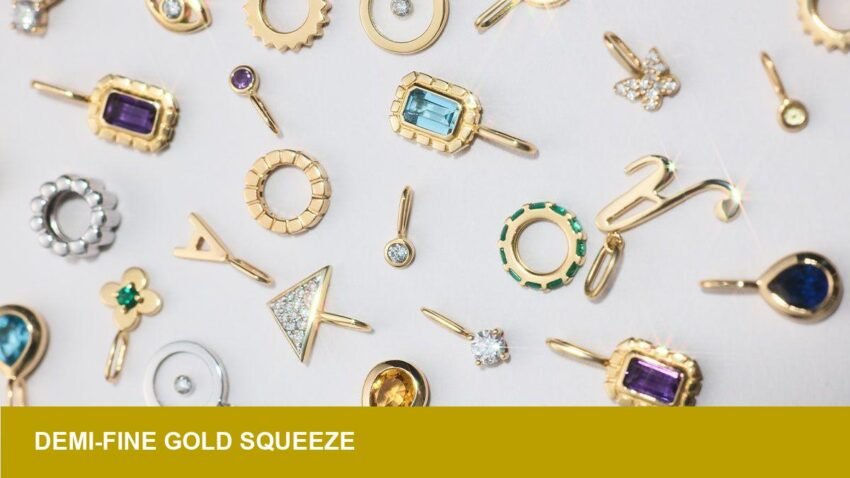
Demi‑fine designers — including household names such as Mejuri and Angara — are confronting an immediate cost headwind as spiking gold prices squeeze the category that positioned itself as an affordable alternative to high jewelry. The move from value play to cost pressure is compressing margins and forcing trade decisions about metal content, finish and SKU mix.
- Category: Demi‑fine jewelry — positioned versus high jewelry
- Primary pressure: rising gold prices affecting input costs
- Brands noted: Mejuri, Angara (examples of the segment)
- Market: US retail and direct‑to‑consumer channels
- Commercial implication: margin and pricing choices for retailers/wholesalers
Context: cost, craftsmanship and the 2025–26 market
The demi‑fine segment trades on a balance of perceived luxury and accessible price points — fine‑metal finishes, compact carat weights and refined construction that mimic higher‑end techniques without the same raw‑material bill. When the price of gold rises, that balancing act is disrupted. Designers and suppliers must weigh options that change both the tactile quality of pieces and the customer proposition.
Typical industry levers include adjusting metal formulations (for example, shifting alloy mixes or karat down‑grades), specifying vermeil or gold‑filled constructions instead of solid high‑karat pieces, and refining component design so visual heft is retained with less bullion — think hollowed shanks, slimmer profiles, or satin‑finished surfaces that read premium without large gold volume. Equally relevant: traceability and recycled metal claims can preserve price premiums for buyers who prioritize sustainability over absolute metal content.
Impact: what US retailers, wholesalers and investors should plan for
For US retailers and online platforms the immediate tasks are inventory triage and margin management. Merchants must decide whether to absorb higher metal costs, pass them to the consumer, or reframe assortment. Practical moves include increasing the share of plated, vermeil or gold‑filled SKUs; staging price bands so core bestselling styles remain available; and highlighting construction details — micro‑pavé settings, knife‑edge shanks, satin‑finished gold — that justify price without solely relying on bullion weight.
Wholesale partners and investors should watch working capital tied to gold stock and the mix of SKUs that require more raw material input. A heavier allocation to solid, high‑karat pieces raises inventory sensitivity to metal swings; a leaner, craft‑focused assortment shifts risk to craftsmanship and brand storytelling. Marketing should pivot from pure price messaging to quiet‑luxury signals: material transparency, measured proportions, and finish quality that reward closer inspection.
Longer term, sustained gold strength will test the demi‑fine value proposition. Brands that can articulate why a piece commands its price — whether through provenance of recycled metals, superior surface finishing, or design that conserves gold while preserving perceived weight — will be better positioned in a market where metal costs no longer sit quietly in the background.
Image Referance: https://www.vogue.com/article/how-demi-fine-jewelry-designers-are-handling-spiking-gold-prices