
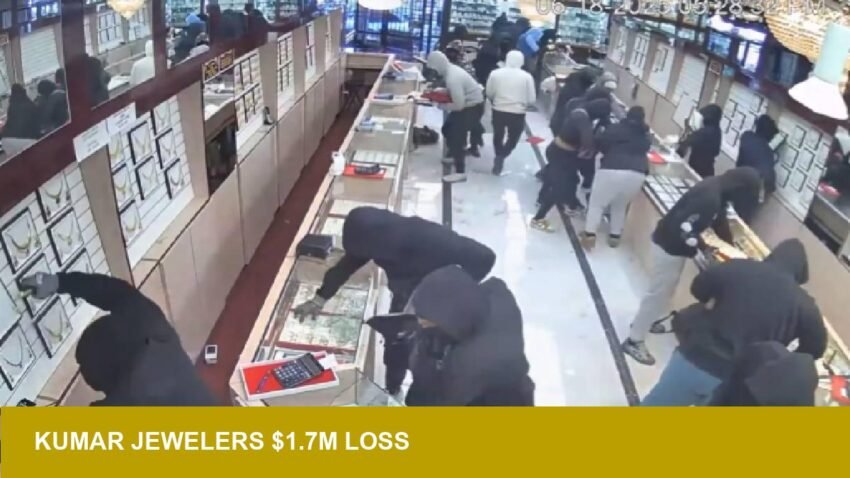
Kumar Jewelers, a family‑owned store in Fremont, California, was the scene of a mob‑style smash‑and‑grab in which masked thieves removed $1.7 million worth of gold and diamond jewelry in just 70 seconds, leaving the retailer with roughly 75% of its inventory gone. Authorities have arrested some suspects, but most remain at large, intensifying concern about organized retail crime and the exposure of small jewelers.
- Loss: $1.7 million in gold and diamond jewelry
- Duration: 70 seconds
- Inventory impact: approximately 75% of store stock removed
- Location: Kumar Jewelers, Fremont, California
- Legal status: some suspects arrested; most remain free
Context: organized retail crime and physical‑inventory risk
The incident in Fremont is consistent with a wider pattern of coordinated retail thefts that target concentrated, high‑value stock in brick‑and‑mortar outlets. For independent, family‑run jewelers the risks are acute: a single event can wipe out a season’s inventory and strain working capital. The description of a “mob‑style” approach underscores the speed and planning such raids require, and the result—substantial, immediate loss of physical assets—plays directly against typical inventory strategies for small retailers.
Impact: what US retailers, wholesalers and investors should consider
For retailers: re‑assess how high‑value items are displayed and stored. Practical steps include reducing visible overnight inventory, reinforcing showcases and access points, and tightening check‑out protocols so that high‑value pieces are not exposed on the sales floor for prolonged periods. For wholesalers and suppliers: this event may increase short‑term demand for secure transit and bonded storage solutions as retailers seek to limit onsite exposure.
For insurers and lenders: a concentrated loss like this can prompt policy reviews and higher underwriting scrutiny for small jewelry accounts. For investors and category managers: the episode highlights an operational risk that can compress margins and complicate inventory forecasting for small independent jewelers.
Finally, the case is a reminder for industry associations and local law enforcement to coordinate on prevention and recovery: rapid reporting, shared intelligence on suspect groups, and crime‑prevention guidelines tailored to jewellery retail can reduce recurrence. The Fremont event is a painful, immediate example of how physical‑market exposures remain a critical line item on balance sheets and operating plans for US jewelers.
Image Referance: https://www.saptashwatv.com/news/international-news/california-jewelry-heist-masked-crew-steals-1-7-million-in-70-seconds-7491.html