
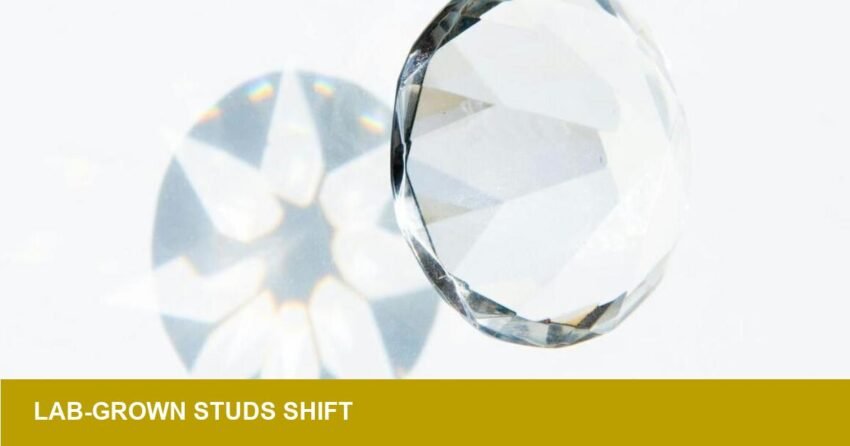
Lab-grown diamonds are increasingly the choice for shoppers buying stud earrings, a shift led by buyers who prioritise intentional spending over sticker price alone. That preference alters merchandising and pricing strategies for US retailers, creating opportunities to reallocate inventory and protect margins without compromising the quiet‑luxury finish expected by this segment.
- Category: lab‑grown diamond stud earrings
- Buyer profile: intentionally minded, quality-focused buyers
- Design cues: open‑backed settings and precision cuts to maximize vitreous luster
- Market focus: US retail — accessible/quiet luxury segment
Context: where this sits in 2025–26 trends
The preference for lab‑grown studs aligns with two durable shifts in the jewellery market: pragmatic sustainability and a quiet‑luxury aesthetic. Buyers in the accessible‑luxury tier are looking for measurable material value — clear origin, consistent optical performance and refined finishing — rather than status signalling. In practice this means more demand for well‑cut round brilliants or calibrated shapes presented in open‑backed, low‑profile settings that preserve brilliance and reveal a clean, vitreous luster.
For manufacturers and designers, the technical focus shifts from maximal carat headline to proportion, polish and mounting quality. Finishes such as satin‑finished gold backs, precise four‑prong or bezel margins and secure friction or locking backs matter to this buyer: they expect a substantial, tactically satisfying fit and reliable wearability.
Impact: what US retailers, wholesalers and investors should do
Merchandising: Treat lab‑grown studs as a core SKU, not a niche. Curate assortments by cut quality and setting craftsmanship — highlight open‑backed mountings, knife‑edge profiles where appropriate, and consistent colour grading to let the stone’s clarity and vitreous luster lead the story.
Pricing & margin: Position lab‑grown studs to protect margin by selling value attributes (cut, finish, warranty, traceable origin) rather than relying on discounting. That reduces inventory ageing and preserves price architecture across natural and lab‑grown assortments.
Sales & marketing: Train staff to discuss origin, certification and technical performance — how an open‑backed setting improves light return, or why a high‑quality cut matters more than carat weight for everyday studs. In creative messaging, emphasise material integrity and refined craft over loud branding; that quiet approach resonates with buyers who choose intentionally.
Inventory planning: Rebalance buy plans toward calibrated sizes and classic cuts that sell through quickly in studs, while maintaining a selective assortment of natural diamonds for customers seeking traditional provenance. For wholesalers and investors, that means valuing product turnover and finish quality as much as stone source when underwriting inventory.
In short, lab‑grown diamond studs are not just a price play. They represent a shift in buyer intent that rewards retailers who prioritise cut, setting and craftsmanship — the tactile and visual details that define quiet luxury in 2025–26.
Image Referance: https://richmond.com/life-entertainment/article_3763bc6d-98ca-5ca2-86c9-eff7f1620e5f.html