
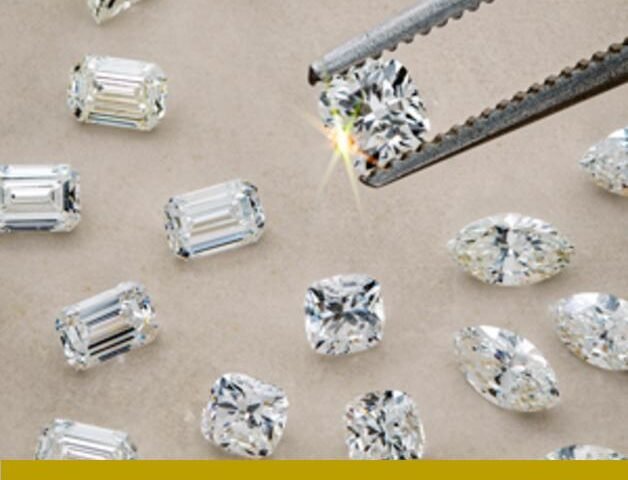
Week of Jan. 19: Rio Grande has enabled its trade customers to search for and purchase calibrated melee diamonds — both natural and lab‑grown — across a range of fancy shapes directly through its platform. The change expands immediate access to ready‑to‑set small stones, shortening sourcing lead times and affecting how retailers and bench jewellers manage inventory and finishing margins.
- Product: calibrated melee diamonds (natural and lab‑grown)
- Shapes: range of fancy shapes (trade‑focused selection)
- Availability: searchable and purchasable directly via Rio Grande’s platform
- Timing: announced Week of Jan. 19
Context: where this fits in current trade trends
The move sits squarely within two ongoing trade dynamics: broader acceptance of lab‑grown melee among trade buyers, and the demand for calibrated stones that remove hours of hand‑sorting. Calibrated melee — consistent diameter, table proportions and calibrated thickness — is prized for micro‑pavé, bead and grain settings where uniform visual texture and fit matter. For designers and bench jewellers who work in satin‑finished gold or platinum, predictable size ranges reduce finishing time and improve yield on labour.
For lab‑grown stones specifically, offering calibrated options simplifies assortment planning. Facilities that perform open‑backed settings or closed pavé benefit from consistent rise and profile; calibrated melee reduces the need for re‑cutting or selection at the bench. Likewise, retailers merchandising minimal, quietly luxurious lines can rely on uniformity in small-stone accents, keeping visual language restrained rather than overt.
Impact: why this matters to US trade buyers and retailers
Retail buyers and wholesale accounts should treat this as an operational lever. Immediate access to calibrated melee can compress inventory buffers: holders of mixed, non‑calibrated stock may find themselves at a cost disadvantage when bench time is measured. Sourcing calibrated stones online also affects margin calculus — reduced hand‑sorting and setting adjustments translate to lower labour cost per piece, but increased availability of lab‑grown melee may exert competitive pressure on pricing for small natural melee.
Merchandisers should update specifications for SKUs that rely on micro‑pavé or tight bead work, adding calibrated size tolerances to purchase orders and BOMs. For buyers positioning collections under a quiet‑luxury aesthetic, the key is material consistency: calibrated melee ensures a uniform vitreous luster across pavé fields and a cleaner visual balance against satin or polished metal finishes.
Finally, inventory teams will want to review lead‑time assumptions and stock‑keeping units. Because Rio Grande’s offering is searchable and purchasable through its platform, reordering cadence can be shortened; buyers who adopt calibrated melee from the outset will see fewer returns to the bench and a smoother path to retail-ready goods.
Image Referance: https://www.jckonline.com/editorial-article/supplier-news-jan-19/