
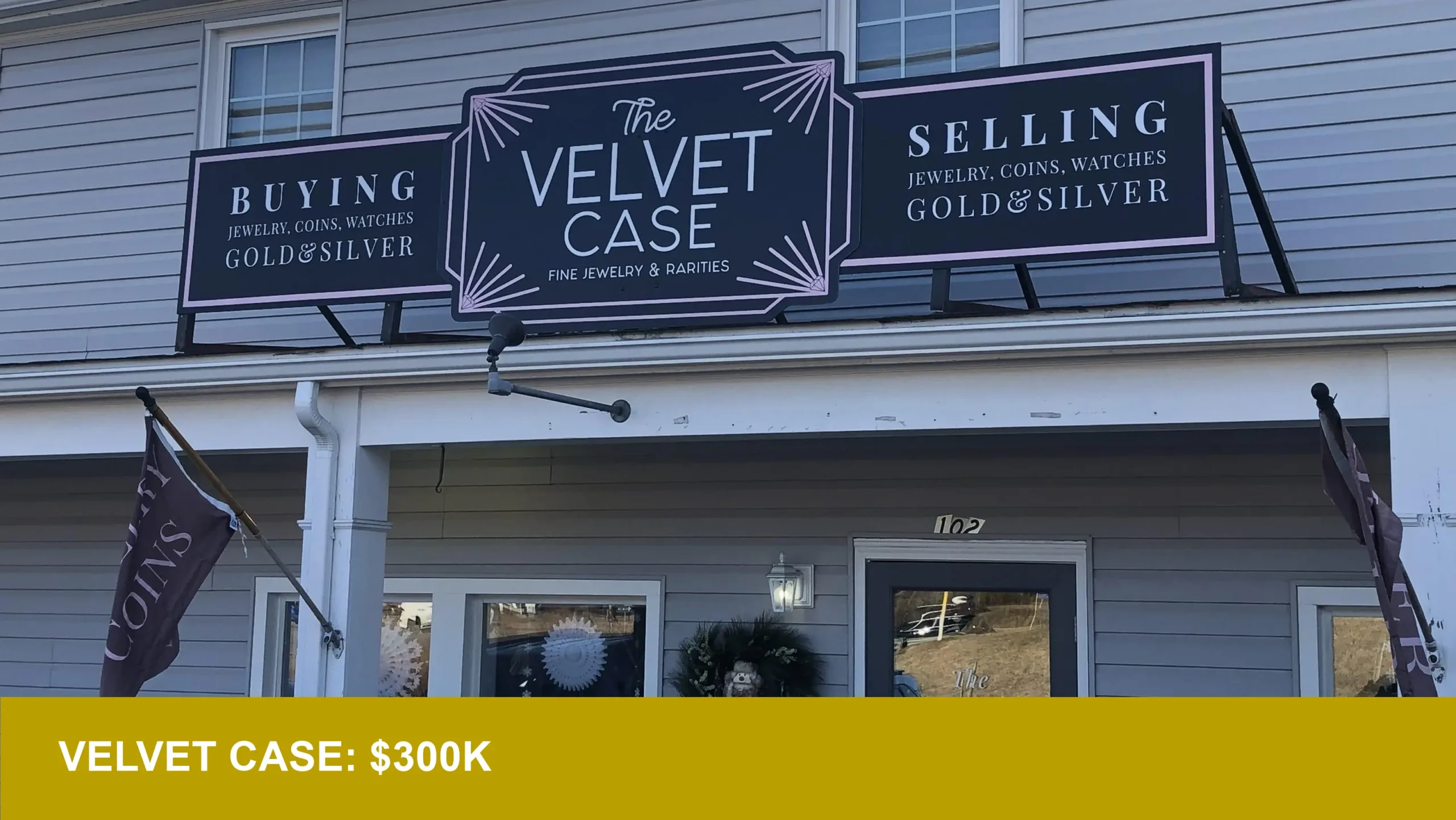
The Velvet Case owner Vanessa Pogreba says a patient, four-hour operation left about $300,000 in jewelry and gold missing after suspects cut through the back of a large safe — an audacious theft that exposed weaknesses in perimeter security and chain-of-custody for high-value inventory.
- Price: Estimated $300,000 in jewelry, gold and cash
- Carat Weight: Mixed — assorted stones; 24 ounces broken gold (valued at >$50,000)
- Origin: The Velvet Case, Rowe Road, Staunton, Va.
- Date: Early hours of Dec. 1, 2025
What happened
Surveillance shows suspects arriving about 1:30 a.m., working under a tarp for roughly four hours as they removed a six-foot by five-foot section of the rear cinder-block wall and exposed the safe. Using spray foam to anchor the safe to remaining masonry and silence motion sensors, the perpetrators cut through the safe’s back panel and sorted contents in situ before departing around 5:30 a.m.
The thieves left behind costume pieces and rolls of low-value coinage, but removed gold, higher-value pieces and several thousand dollars in bills — a pattern the owner describes as evidence of jewelry knowledge and targeted intent.
Context: why this matters in 2025
This breach illustrates two trends shaping the US jewelry market in 2025. First, criminal tactics have matured: instead of smash-and-grab blasts of force, thieves are using time, improvised scaffolding and construction techniques to defeat perimeter sensors and fixed safes. The use of spray foam to immobilize a safe speaks to an operational understanding of sensor systems and response windows.
Second, the episode amplifies pressure on provenance and secondary-market controls. Stolen gold and loose pieces can be rapidly melted or exported; rising demand for responsibly sourced metals and transparent chain-of-custody means stolen inventory can increasingly be laundered through informal export channels unless retailers adopt serialisation, digital records and better buy-back trace protocols.
Impact for US retailers and investors
For brick-and-mortar jewelers the lesson is immediate and practical: rethink sightlines and the visible placement of safes. Pogreba notes the safe was partially visible through an office door — information she believes may have been passed locally. Small modifications have outsized effects: relocating a safe to an inner wall, installing metal grates, hardening masonry, and updating sensor placement to detect tampering at the rear of fixtures can deter patient breaches.
Insurers and investors should also recalibrate risk models. Traditional calculations that assume a smash-and-grab response window no longer capture the risk of slow, premeditated penetrations. Underwriting should incorporate perimeter-build resilience, forensic inventory tagging (microstamping, laser-engraving, blockchain registries) and contingency planning for cross-border recovery when thieves may be linked to professional, international rings.
Owner response and next steps
Pogreba has installed a new safe on an inner wall and fitted metal grates at The Velvet Case. She describes the loss with quiet resolve — “I can build back” — and is cooperating with the Augusta County Sheriff’s Office as investigators examine footage and the possibility the stolen pieces have been moved out of the area.
For retailers, the theft is a reminder that inventory control, architectural hardening and traceable provenance are not optional. In a market where recycled and responsibly sourced materials carry increasing resale value, robust security and clear records protect both balance sheets and brand trust.
Reporting based on statements to The News Leader and interviews with the store owner; investigation ongoing with the Augusta County Sheriff’s Office.
Image Referance: https://www.newsleader.com/story/news/local/2026/01/06/staunton-jewelry-store-owner-velvet-case-theft/87992935007/